Home
 About Us
 Become a Subscriber

 Flight Booking
 Hotel Booking
 Trip Booking
 Visa Booking
 Booking History
 Blogs
 Wishlist
 Support
 Log In


 23 Oct 2026
 0
 Asma
Is Edinburgh Worth Visiting? The Scottish Capital That Packs Three Bucket Lists Into One City
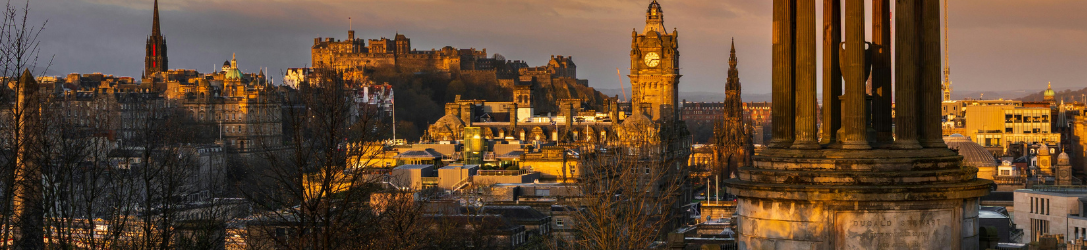
Is Edinburgh worth visiting? The question answers itself once you understand what is actually there. A medieval castle sitting on a plug of ancient volcanic rock above the city. A cobblestone winding street that J.K. Rowling walked every day when she was writing Harry Potter and that she used as the direct inspiration for Diagon Alley. A hike up an extinct volcano inside the city boundary that puts you above the skyline with views to the Firth of Forth. The Scottish Highlands beginning two and a half hours away by car. A halal restaurant that has been feeding Edinburgh’s South Asian community since 1979 and is five minutes walk from the city centre.
For Pakistani travelers, Edinburgh is the most distinctive stop available on a UK trip. It is also significantly cheaper than London, has one of Britain’s most established mosque communities, and gives you Scotland’s greatest landscapes as day trips from your hotel. This guide covers everything, including the two things no other guide mentions: what to do about halal food on a Highland day trip, and the specific iftar timing warning that every Pakistani Muslim traveling to Edinburgh in summer needs to read before they go. Book flights to Edinburgh from Pakistan on Mosafir: Islamabad to Edinburgh flights, Lahore to Edinburgh flights and Karachi to Edinburgh flights.
UK Visa for Scottish Travel — Same Process, Different Destination
Scotland is part of the United Kingdom and a UK Standard Visitor Visa covers travel anywhere in Scotland, England, Wales, and Northern Ireland. The visa process is identical to applying for any UK trip.
Apply online at gov.uk/standard-visitor-visa and book a VFS Global appointment in Islamabad, Lahore, or Karachi for biometrics and document submission. The fee is £115 for a standard six-month visitor visa. Standard processing takes 15 working days from the biometrics date. Priority service at £250 extra reduces this to 5 working days. Apply at least six to eight weeks before departure.
Documents required include a valid Pakistani passport with six or more months remaining, bank statements covering the last six months, employment letter and salary slips, property ownership evidence, proof of accommodation in the UK, a return flight itinerary, and a full travel itinerary covering your Edinburgh stay.
The most important factor in approval is demonstrating strong ties to Pakistan through employment, property, and family dependants. If you already have a valid UK visa from a previous trip, a Schengen visa, or a US visa, include copies as they significantly strengthen the application.
One practical note on itinerary: if your UK trip combines London and Edinburgh, make sure the itinerary clearly shows both destinations. UK visa officers look favourably on structured multi-city itineraries as they demonstrate genuine tourism intent.
Edinburgh Castle — The Ancient Volcanic Rock That Started a City
Edinburgh Castle is not simply a castle. It is a complex of buildings spanning twelve centuries on the summit of Castle Rock, a volcanic plug that rises 130 metres above the city and has been fortified since at least the 12th century. Standing at the castle esplanade looking down the Royal Mile toward the Palace of Holyroodhouse with the Forth estuary in the distance on a clear day is one of the finest views from any city fortress anywhere in Europe.
What to see and what to know:
The Crown Jewels of Scotland, known as the Honours of Scotland, are the oldest surviving royal regalia in Britain, predating the English crown jewels by more than 150 years. They are housed in the Crown Room and include the crown worn by Mary Queen of Scots. The Stone of Destiny, on which Scottish kings were crowned for centuries and which was removed to England in 1296 and returned to Scotland in 1996, sits alongside them.
The One O’Clock Gun has fired from the castle every weekday at precisely 1pm since 1861, a time signal originally for ships in the Firth of Forth to set their chronometers. It still fires today. If you are at the castle at 1pm and do not know it is coming, it is extremely loud.
St Margaret’s Chapel is the oldest building in Edinburgh, built around 1130 CE and dedicated to Queen Margaret of Scotland who was later canonised. It is the only building in the castle to have survived the countless sieges of the medieval period.
Book tickets in advance at edinburghcastle.scot. Adult tickets are approximately £22. Skip-the-line timed entry is available and worth using in summer when walk-up queues can reach an hour. Allow two to three hours for a thorough visit.
The Royal Mile — A Walking Street That Covers a Thousand Years
The Royal Mile is not a single street but a sequence of connected streets running exactly one Scottish mile from Edinburgh Castle at the top to the Palace of Holyroodhouse at the bottom through Edinburgh’s medieval Old Town. Every building on either side tells a different chapter of Scottish history.
Walking it from top to bottom takes about 20 minutes at a steady pace and considerably longer if you explore the closes, the narrow alleyways that run perpendicular to the Mile through the old tenement blocks, where entire communities lived stacked vertically in buildings that reached ten or eleven stories in the 16th century because the city wall prevented outward expansion.
What to stop at along the way:
St Giles Cathedral, the High Kirk of Edinburgh, sits in the middle of the Royal Mile at Parliament Square. Its crown spire is one of Edinburgh’s most distinctive architectural features. Free entry. The interior has the Chapel of the Order of the Thistle, Scotland’s highest order of chivalry, with elaborately carved choir stalls.
Camera Obscura, near the castle end of the Mile, has been a tourist attraction since 1835. A Victorian optical device projects a live image of the city onto a white table below the observation tower. Oddly fascinating and very popular with children.
The Scottish Parliament building at the bottom of the Mile, opened in 2003, is a controversial piece of contemporary architecture that the Scottish Parliament commissioned specifically to not look like Westminster. It is worth seeing for the debate about whether it succeeds.
Harry Potter Edinburgh — The Walking Guide No Other Source Has Written for Pakistani Audiences
J.K. Rowling wrote the early chapters of Harry Potter while living in Edinburgh and working in the cafes of the Old Town. The city’s medieval streets, ancient graveyards, and Gothic architecture are directly present in the books in a way that makes walking through Edinburgh as a Harry Potter reader feel like discovering the source code.
Victoria Street is the non-negotiable first stop. It is a winding cobblestone street that curves downward in a gentle arc with colourful shopfronts on the lower level and a walkway above. Rowling has confirmed it as the primary visual inspiration for Diagon Alley. Walk it from the top where it begins at George IV Bridge and follow it down. The photography opportunities at the curve, where the whole street appears in a single frame, are the ones that appear in every HP travel post on social media. Go in the morning before the tour groups arrive.
Greyfriars Kirkyard is a 16th-century graveyard five minutes from Victoria Street that contains the headstones of Thomas Riddell (the spelling differs from Tom Riddle but the connection is generally accepted), William McGonagall, and several other names that appear directly in the Harry Potter books. It is free to enter and is open during daylight hours. The churchyard also has a small dog statue of Greyfriars Bobby, a Skye Terrier who famously guarded his owner’s grave for fourteen years after his death and is now the most photographed dog sculpture in Scotland.
The Elephant House cafe on George IV Bridge is where Rowling wrote significant portions of the early Harry Potter manuscripts. It is a working cafe with original Harry Potter manuscripts photographed on the walls and the bathroom entirely covered in fan tributes from decades of visitors. Order coffee, sit by the window with the castle view, and spend twenty minutes understanding where the books came from. The queue for the bathroom is worth it.
George Heriot’s School, visible from Greyfriars Kirkyard on the other side of the wall, is a 17th-century school building that is widely cited as one of the visual inspirations for Hogwarts school architecture. Its towers, turrets, and quadrangles are architecturally coherent with what Rowling describes. It is a working school and not generally open to visitors, but the exterior is fully visible from the street and the graveyard.
A self-guided walk connecting all four locations takes approximately two to three hours at a comfortable pace including time in the cafe and the graveyard.
Halal Food in Edinburgh — The Full Guide
Edinburgh’s halal food scene is smaller than Birmingham or London but it is genuinely good, concentrated in the Southside area, and supplemented by the Edinburgh Central Mosque restaurant which is open to all visitors.
Kebab Mahal on Nicolson Square is the institution. Operating since 1979, it is a Pakistani and Indian restaurant serving karahi, biryani, and traditional Pakistani dishes at very affordable prices. The student population of nearby Edinburgh University has eaten here for decades and the quality has remained consistent. It is halal certified and the closest thing to a proper Pakistani restaurant in Edinburgh city centre.
Edinburgh Central Mosque on Potterrow, five minutes walk from Kebab Mahal, has an adjacent community restaurant serving Pakistani and South Asian food at extremely affordable prices. It is primarily used by the mosque community but is open to visitors. Friday prayers here draw the Edinburgh Muslim community from across the city.
Kebabish Original on Forrest Road is the Edinburgh branch of the established UK halal chain. Reliable, HMC certified, good for grilled meats and desi BBQ.
The Southside area around Nicolson Street and Clerk Street has a concentration of South Asian and Middle Eastern restaurants, many halal certified, within a compact walkable area.
For groceries and halal meat: South Asian grocery stores and halal butchers are located in the Southside area along Nicholson Street and on South Clerk Street.
One important warning for Pakistani Muslim travelers visiting Edinburgh during summer: Edinburgh in June and July has extremely long days due to its northern latitude. Sunset in mid-June is after 10pm. If you are fasting during Ramadan and visiting in summer, iftar will be extremely late by Pakistani standards. This is genuinely useful information that every Muslim travel guide covering Edinburgh omits entirely. Plan your daily schedule around this.
Where to Stay in Edinburgh
Edinburgh has a wide accommodation range with two particularly useful areas for Pakistani travelers.
The Old Town around the Royal Mile puts you in walking distance of Edinburgh Castle, Greyfriars Kirkyard, Victoria Street, and the start of Holyrood Park. It is the most atmospheric location in Edinburgh with medieval streets and views of the castle from the hotel windows of several properties. Mid-range hotels in this area run approximately £90 to £140 per night.
The Southside area around Nicolson Street and Clerk Street is Edinburgh’s South Asian community area and the location of Kebab Mahal, the Edinburgh Central Mosque, and the Pakistani grocery stores. Budget accommodation is significantly cheaper here than the Old Town, running approximately £55 to £85 per night for solid mid-range options. The walk to the Royal Mile is approximately fifteen minutes.
Princes Street and the New Town is the premium location with views of the castle from the north side of the city. The Balmoral Hotel and several other landmark hotels occupy this area. More expensive but the view from a Princes Street hotel room toward the castle is one of the finest hotel views in Britain. But whatever choice you make, always book your stay in advance to avoid last minute price surges.
Best Time to Visit Edinburgh
Edinburgh has strong appeal across all seasons with four distinct reasons to visit at different times of year.
August is the Fringe Festival month and the busiest time of year. The city is at its most vibrant and most crowded simultaneously. Accommodation prices peak. If you want the Fringe experience, book everything four to six months ahead.
May and June offer mild weather, long daylight hours, and significantly smaller crowds than August. The city is at its greenest and most photogenic. The one caveat for Muslim travelers is the iftar timing issue mentioned above: in June, sunset is after 10pm.
December brings the Edinburgh Christmas Market and the build-up to Hogmanay. The Christmas Market along Princes Street with the castle illuminated above it is one of the finest in Britain. The city is festive, cold at approximately three to eight degrees Celsius, and significantly cheaper than August.
Hogmanay, Scottish New Year on 31 December, is one of the world’s great street celebrations. Edinburgh’s Hogmanay street party on Princes Street draws 80,000 people and is a licensed ticketed event. The fireworks over the castle at midnight are extraordinary. Pakistani families visiting the UK for New Year should consider Edinburgh specifically for this.
September and October are the underrated window. The Fringe is over, crowds thin dramatically, autumn colour begins on Arthur’s Seat and in the Botanic Garden, and accommodation prices drop by thirty to forty per cent from August peaks.
Whenever you visit, always go for guided activities for a hassle-free experience.
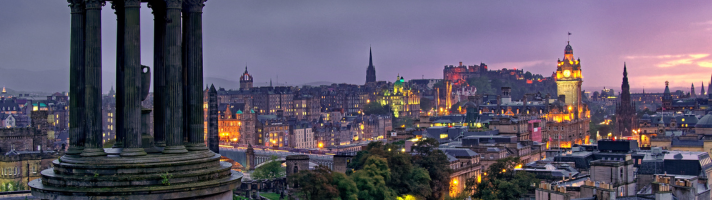
Getting Around Edinburgh
Edinburgh’s city centre is compact and highly walkable. The Royal Mile, Victoria Street, Greyfriars Kirkyard, Arthur’s Seat, and the Southside halal food area are all within twenty to thirty minutes on foot of each other.
Lothian Buses cover the wider city and run frequently on all main routes. Pay by contactless card on boarding. Day tickets are available at the driver for approximately £4.50 and cover unlimited travel across the day.
Edinburgh Trams run between Edinburgh Airport and the city centre, through Princes Street, and out to Newhaven on the waterfront. Useful primarily for the airport connection and for Princes Street. Contactless card payment on board.
ScotRail connects Edinburgh Waverley to Glasgow Queen Street in fifty minutes, to Stirling in forty-five minutes, to St Andrews via Leuchars in approximately one hour, and to various Highland destinations. Buy advance tickets at scotrail.co.uk for the best prices.
Uber operates in Edinburgh and is the most practical option for Arthur’s Seat, Holyrood Park, and any journey with luggage. Taxis are widely available at ranks outside Waverley station and on Princes Street.