Home
 About Us
 Become a Subscriber

 Flight Booking
 Hotel Booking
 Trip Booking
 Visa Booking
 Booking History
 Blogs
 Wishlist
 Support
 Log In


 27 Oct 2026
 0
 Asma
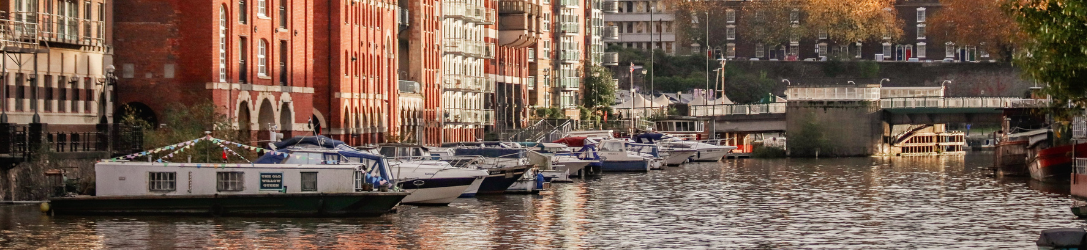
Things to Do in Bristol: The UK City Where the Best Experiences Are Free and the Halal Food Is Outstanding
Bristol does not appear on enough Pakistani travel lists and that is a genuine oversight. The UK’s sixth-largest city is Banksy’s hometown, the birthplace of the world’s first ocean-going iron steamship, the site of the world’s largest annual hot air balloon event, and the location of a South Asian halal food strip on Stapleton Road in Easton that many Pakistani visitors to Bristol describe as the best halal street they found in England outside Birmingham. It is also one hour and forty-five minutes from London by direct train and significantly cheaper in every category.
What makes Bristol specifically compelling for Pakistani family travelers is the proportion of genuinely extraordinary experiences that cost nothing at all. The Banksy street art trail is free. The Bristol Harbourside walk is free. The Bristol Museum and Art Gallery is free. The Balloon Fiesta in August is free. A full, rewarding two days in Bristol can be completed spending very little outside food and accommodation.
This guide covers everything: flights and getting there, the UK visa, the free and paid attractions, the Banksy trail, the halal food in Easton and Stapleton Road, the Balloon Fiesta, and the day trips that make Bristol one of the best bases available for exploring the southwest of England. Before travelling, check and compare fares from Lahore, Islamabad, and Karachi.
The Banksy Trail — Free, Self-Guided and Genuinely Extraordinary
- Banksy was born and raised in Bristol. The anonymous street artist who became the most globally recognised name in contemporary art created his earliest and most significant work on the walls of his hometown. Walking Bristol looking for Banksy work is the most distinctive cultural experience the city offers and it costs absolutely nothing.
- The important caveat that most Banksy guides omit: street art is impermanent. Works can be painted over, damaged, or removed. The specific pieces listed below were verified as present in Bristol but should be cross-checked against current Banksy Bristol fan community resources before planning the walk around specific pieces. The experience of the walk through these neighbourhoods is rewarding regardless.
- Stokes Croft and Cheltenham Road form the primary street art corridor in Bristol. This is a deliberately alternative neighbourhood, the kind of area that resists gentrification through cultural density, and the walls along Cheltenham Road and the surrounding streets carry the highest concentration of street art in the city. Walk north from the city centre along Cheltenham Road and explore the side streets. Multiple significant Banksy pieces have appeared here over the years and the area has an active community of other Bristol street artists including Cheba, Epok, and 3Dom whose work rivals the primary attraction.
- Bedminster on the south side of the city is the other main street art hub. The Tobacco Factory area and the streets around North Street have a strong murals tradition. The North Street Standard character piece, one of the most photographed Banksy works remaining in Bristol, is in this area.
- The Well Hung Lover piece on Frogmore Street near the city centre is one of the longest-surviving Banksy works in Bristol, a mural painted in 2006 that remains one of his most reproduced images.
- Practical guide to doing the Banksy trail:
- Go early morning for photography without people walking into frame and for the best light on painted surfaces. Take a screenshot of the current verified Banksy Bristol map from the Visit Bristol website or the Banksy Bristol fan community before you start. The walk connecting Stokes Croft, the city centre pieces, and Bedminster takes approximately three to four hours at a comfortable pace. Wear flat shoes. The streets are hilly in places.
Clifton Suspension Bridge — The Victorian Marvel Above the Gorge
The Clifton Suspension Bridge is Bristol’s most iconic image — an 1864 Isambard Kingdom Brunel-designed suspension bridge spanning the Avon Gorge 76 metres above the tidal river below. It is free to walk across and the view down the gorge from the centre of the bridge is one of the most dramatic free viewpoints in England.
The Clifton Suspension Bridge Visitor Centre on the Leigh Woods side of the gorge tells the full story of the bridge’s construction. Brunel designed it in 1831 but did not live to see it completed. It opened five years after his death and stands as his most visually striking legacy. The visitor centre is free to enter and worth thirty minutes.
The surrounding Clifton Village on the Bristol side of the bridge is the most affluent and photogenic neighbourhood in the city, with Georgian terraces, independent cafes, and the Clifton Downs parkland stretching back from the gorge. An afternoon here combining the bridge, the visitor centre, and a walk along the Downs toward the Observatory is one of the most pleasant free experiences Bristol offers.
The best photograph of the bridge is taken from the Avon Gorge below on the riverside path. Walk down from Clifton Village via the zigzag path to the river and look back up at the bridge from directly below.
SS Great Britain — The Ship That Changed the World
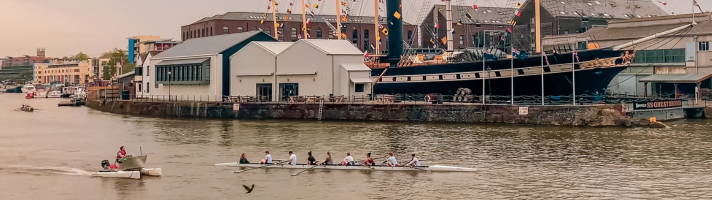
The SS Great Britain in Bristol Harbourside is the world’s first ocean-going iron-hulled, propeller-driven steam ship, designed by Brunel and launched in 1843. It is the direct ancestor of every modern ocean liner and cargo vessel that followed. The ship was brought back to Bristol in 1970 after being abandoned in the Falkland Islands and has been preserved in the original dry dock where it was built.
Why it earns a half-day:
The SS Great Britain is a genuinely extraordinary object. Standing inside the dry dock looking up at the iron hull from below, understanding that this was built in 1843 from a material that no one had previously thought to use for a ship of this scale, connects you to a moment of genuine industrial revolution. The museum surrounding the ship is well-curated with original artefacts, passenger diaries, and the story of Brunel himself.
The Harbourside location is also Bristol’s most pleasant waterfront area, with the M Shed museum next door (free entry, covering Bristol’s history from the docks to the present) and the Watershed cinema and cultural centre on the waterfront.
Adult tickets for the SS Great Britain are approximately £22. Book online at ssgreatbritain.org for the best price. The M Shed museum adjacent is entirely free.
Travel Tip: Always go for guided activities and trips for the most engaging and hassle-free experience.
Bristol Balloon Fiesta — The Free Family Event Nobody Told Pakistani Travelers About
- The Bristol International Balloon Fiesta takes place annually in August at Ashton Court Estate, a country park two kilometres from the city centre. It is the largest hot air balloon event in Europe, with over 100 balloons participating across four days and the mass ascents producing an aerial spectacle with no direct equivalent anywhere else in Britain.
- The most important fact: entry is free. There is no ticket price to attend the Bristol Balloon Fiesta. The event is open to the public across all four days and the main mass ascent events and Night Glows are all included without charge.
- How the Fiesta works:
- Mass ascents happen twice daily, in the early morning and in the early evening, weather permitting. The sight of 100 balloons rising simultaneously over the Bristol skyline and the Clifton Suspension Bridge in the distance is the defining visual of the event. Mass ascents begin at approximately 6am for the morning session and around 6pm for the evening session. Arrive early for a good position on the Ashton Court grounds.
- Night Glows happen on the Thursday and Friday evenings of Fiesta week. After dark, the tethered balloons inflate and illuminate simultaneously while music plays across the ground. The effect of 30 or more balloons glowing in colours against the dark sky, arranged across the field in front of you, is one of the most visually extraordinary free events in Britain.
- Halal food at the Fiesta: the food stalls on the Ashton Court grounds are a general fairground mix and halal-certified options are limited. Bring food from Stapleton Road or Easton for the day. This is entirely practical given that the Fiesta grounds have good picnic facilities.
- Getting there: First Bus operates a Park and Ride shuttle from Bristol city centre during Fiesta week. The shuttle takes approximately 20 minutes. Do not drive directly to Ashton Court on mass ascent mornings as the roads around the estate are congested.
- Accommodation during Fiesta week: Bristol fills up significantly during the Balloon Fiesta. Book hotels at least three months ahead if planning the trip specifically around the event.
Stapleton Road and Easton — The Halal Food Strip Pakistani Travelers Seek Out
- Easton is Bristol’s most vibrant multicultural neighbourhood, a short bus ride from the city centre, with South Asian, Somali, and Caribbean communities creating a cultural density that makes the area feel entirely different from the rest of Bristol. Stapleton Road is the main commercial artery, and the stretch from the junction with Stretford Road up toward Fishponds Road is the halal food and South Asian grocery corridor that Pakistani visitors specifically seek out.
- What Stapleton Road and Easton offer:
- Pakistani and Bangladeshi curry houses along Stapleton Road serve karahi, biryani, and traditional dishes at prices far below central Bristol restaurants. The quality is consistent and the portions are generous in the way that South Asian community restaurants rather than tourist-facing establishments tend to be.
- Noshh restaurant in Easton has a strong reputation for halal modern food combining South Asian influences with British presentation. It has been written up in national food media and is worth booking ahead on weekends.
- Halal supermarkets and butchers including Al-Noor and Eastern Eye operate on Stapleton Road and the surrounding streets with fresh halal meat and imported South Asian groceries including Pakistani branded products.
- The Bristol Jamia Mosque on Green Street and the Easton Jamia Mosque on Stapleton Road both serve the community for Friday prayers. The South Asian community in Easton is primarily Bangladeshi and Pakistani in origin and Urdu is spoken throughout the area.
- For Pakistani travelers specifically: Stapleton Road during a weekday morning or a weekend afternoon has the feel of a South Asian high street, with the grocery stores, sweet shops, and community atmosphere that makes it immediately recognisable. It is the closest thing in Bristol to Sparkhill in Birmingham or Southall in London.
- Getting to Easton from the city centre: Bus 5 or Bus 5A from the city centre stops on Stapleton Road. Journey time approximately fifteen minutes. Or a ten-minute Uber from Bristol Temple Meads.
Day Trips from Bristol — Four That Are Worth Your Time
- Bristol’s geographic position in southwest England makes it one of the best day-trip bases in the UK. London is one hour forty-five minutes away by train but the more compelling trips are the ones in the other direction.
- Bath is twenty-five minutes from Bristol by train and is the strongest day trip available from any UK city outside London. The Roman Baths, built around natural hot springs that the Romans found in 43 CE, are one of the finest preserved Roman sites in Europe. The Royal Crescent, a sweeping curve of thirty Grade I listed Georgian terraces built between 1767 and 1774, is the most architecturally harmonious street in Britain. The city sits in a bowl of hills with the River Avon running through it and is entirely walkable on a day trip. Halal food options in Bath are limited: bring food from Stapleton Road or eat vegetarian and seafood in the excellent central market. Train tickets from Bristol Temple Meads to Bath Spa cost approximately £8 to £12 return.
- Stonehenge is one hour and fifteen minutes from Bristol by car or coach. The prehistoric stone circle completed around 3000 BCE is one of the most visited UNESCO World Heritage Sites in Britain. The English Heritage visitor centre, opened in 2013, is well-designed and the exhibition covering what archaeologists understand about Stonehenge’s construction and purpose is genuinely informative. There are no halal food options on site. Bring packed food. The coach tour from Bristol costs approximately £30 to £40 including entry.
- Cardiff in Wales is fifty minutes from Bristol by direct train. The Welsh capital has Cardiff Castle in the city centre, the covered Victorian arcades that are some of the most beautiful surviving shopping arcades in Britain, and a South Asian quarter with halal restaurants along City Road a short taxi ride from the station. The National Museum Wales in the Civic Centre has free entry and a remarkable collection of Impressionist paintings donated by the Davies sisters in the early 20th century, including significant Monet and Renoir works.
- The Cotswolds are one hour from Bristol by car, the most quintessentially English landscape of honey-stone villages, dry-stone walls, and rolling green hills available anywhere in Britain. Bourton-on-the-Water is the most popular village with a miniature model of itself at its centre. Bibury is the most photographed, with Arlington Row of 14th-century weavers’ cottages beside a stream. Driving through the Cotswolds is the practical approach as public transport connections to individual villages are limited. Halal food is unavailable in most Cotswolds villages. Pack from Stapleton Road.
Getting Around Bristol
- Bristol is a compact and walkable city for the main tourist areas. The Harbourside, Cabot Circus, the city centre attractions, and College Green are all within twenty minutes on foot of each other.
- First Bus operates the main bus network. Contactless card payment is accepted on all buses. Bus 1, 2, and 8 cover the most useful tourist routes between the city centre, Clifton, and Easton. A day ticket costs approximately £5.
- The Bristol Ferry Boat Company runs regular ferry services between Hotwells, the city centre, and Bristol Temple Meads along the Harbourside and Floating Harbour. Journey time is short and the harbour view from the water is the best perspective on the converted Victorian docklands.
- Uber operates city-wide. A journey from Bristol Temple Meads train station to Clifton costs approximately £6 to £8.
- Bristol Temple Meads is the main railway hub with direct services to London Paddington, Cardiff, Bath, Birmingham, and Edinburgh.
Best Time to Visit Bristol
- August is the standout month because of the Balloon Fiesta. If the Fiesta is not a specific priority, the best overall windows are May to September for outdoor weather and September to October for thinner crowds and lower accommodation prices after the summer peak.
- The Bristol Balloon Fiesta typically runs across four days in the second week of August at Ashton Court Estate. Book accommodation for Fiesta week three to four months in advance.
- December brings Bristol’s Christmas Market on Broadmead and around the Harbourside, running from mid-November through December. It is smaller than Birmingham’s but well-designed and free to walk through.
- Spring from April to June is pleasant in Bristol with the Clifton Downs and Ashton Court parkland at their greenest and the city’s outdoor festival calendar beginning.