Home
Home About Us
 Become a Subscriber

 Flight Booking
 Hotel Booking
 Trip Booking
 Visa Booking
 Booking History
 Blogs
Blogs
 Wishlist
 Support
 Log In



 09 Jul 2026
 0
0 Asma
Asma
What to Do in Quetta: The Complete 2026 Guide to Pakistan's Mountain Capital
Quetta does not appear on enough travel lists, and the reason is usually safety perception. This guide addresses that directly and then gets on with what actually matters because Quetta has a mountain lake that rivals anything in northern Pakistan, a day trip that takes you to one of the world's oldest juniper forests, a national park where you can track Pakistan's national animal in its natural habitat, and a roast lamb dish so distinctive it has its own name. For domestic Pakistani travelers, it is a one-hour flight from Karachi and less than two hours from Islamabad. This guide covers everything worth doing, skimmably and for stays, always choose Mosafir for best and reasonable options.
Is Quetta Safe to Visit in 2026?
This question leads every Quetta conversation, so it gets answered first. The honest answer is: most domestic Pakistani travelers visit Quetta's city centre, Hanna Lake, and the main bazaars without incident, and have done so consistently. The security situation in Balochistan is complex and varies significantly by area and route; central Quetta and established tourist sites are a different proposition from remote highway routes.
What you need to know before you go:
- Central Quetta, Hanna Lake, the main bazaars, and the museum are regularly visited by domestic tourists
- The Ziarat day trip (2.5–3 hours each way) should be arranged through a reputable local tour operator who knows current route conditions
- Check MOFA Pakistan's current travel advisory before departure
- Travel insurance covering the region is strongly recommended
- Excursions outside the city are best done with a local guide rather than independently
- The situation changes, verify closer to your travel date, not months ahead
- Go for guided tours whenever travelling
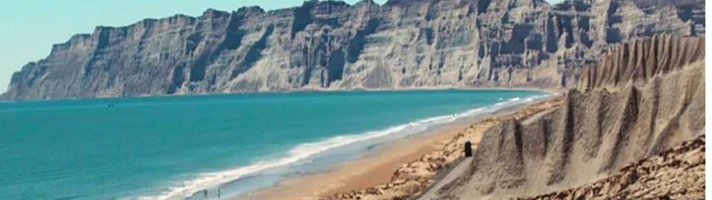
Hanna Lake — Quetta's Most Photographed Escape
About 10 km from the city centre, Hanna Lake is a mountain-ringed reservoir that genuinely surprises first-time visitors with how beautiful it is. The turquoise water set against bare rocky peaks is the image most associated with Quetta in travel photography and it lives up to it in person.
Why it deserves a half-day:
- Turquoise mountain-ringed water unlike anything else near a Pakistani city
- Boating available; small wooden boats for hire at the lakeside
- Popular picnic destination with shaded areas and food stalls
- Best visited in the morning for calm water and best light
- Approximately 20–25 minutes from central Quetta by taxi
Quaid-e-Azam Residency, Ziarat — The Most Significant Day Trip
About 130 km from Quetta, the hill town of Ziarat is where Pakistan's founder Muhammad Ali Jinnah spent his final days in 1948. The Quaid-e-Azam Residency; a well-preserved colonial-era wooden building — sits in a valley surrounded by one of the oldest juniper forests in the world, some trees estimated at over 5,000 years old. It is one of the most historically significant and naturally beautiful sites in Balochistan.
Why Ziarat earns a full day:
- Quaid-e-Azam Residency, historically significant, well-maintained, deeply atmospheric
- Ziarat juniper forest among the world's oldest, UNESCO-recognised ecological significance
- Cool mountain air even in summer; Ziarat sits at 2,450 metres
- The drive through Balochistan's mountain landscape is itself worth the journey
- Arrange through a reputable local tour operator, do not drive independently
Hazarganji Chiltan National Park — Where Pakistan's National Animal Roams
Just outside Quetta, Hazarganji Chiltan National Park is a protected wildlife area and the best place in Pakistan to see the Chiltan Markhor — the country's national animal and one of the world's most endangered wild goat species. The park also has hiking trails, elevated viewpoints, and a landscape that shifts from scrubland to rocky mountain terrain.
Why nature travelers rate it highly:
- Best chance in Pakistan to see Chiltan Markhor in the wild
- Hiking trails ranging from accessible to challenging
- Elevated viewpoints over Quetta and the surrounding mountain bowl
- Less visited than northern Pakistan's parks, genuinely quiet
- Best in spring (March–May) when the landscape is greenest
Archaeological Museum of Balochistan — More Impressive Than Visitors Expect
Located near the city centre, the Archaeological Museum of Balochistan holds one of the most underappreciated collections in Pakistan — artefacts spanning the Stone Age, Indus Valley Civilisation, Islamic period, and Baloch tribal history, alongside Quranic manuscripts and military artefacts from successive ruling powers in the region.
Why it earns a morning:
- Artefacts from the Stone Age through the Mughal period in one building
- Indus Valley Civilisation finds that put Quetta in its proper ancient context
- Quranic manuscripts and Islamic art collection
- Housed in the historic Sandeman Hall building
- Allow 1–1.5 hours, small but genuinely well-curated
Miri Fort — Ancient History on a Hilltop
Miri Fort is one of Quetta's oldest surviving structures, sitting on a hilltop with panoramic views across the city. The fort houses artefacts linked to the Indus Valley Civilisation and Mohenjo-Daro period, and the hilltop position gives the best overview of Quetta's distinctive geography — the flat city floor ringed entirely by mountain ridges.
Why the fort is worth the climb:
- One of the oldest surviving fortifications in Balochistan
- Indus Valley Civilisation-era artefacts on site
- Best panoramic viewpoint over the entire city
- The mountain-ringed geography of Quetta only makes sense from above
- Most manageable in the morning before the sun is directly overhead
Liaquat Bazaar and Suraj Ganj Bazar — Quetta's Carpet and Craft Markets
Quetta's bazaars have a distinctly different character from Punjab's markets — the influence of Afghan trade is visible in the carpets, the dried fruit stalls, the Afghani jewellery, and the overall atmosphere. Liaquat Bazaar and Suraj Ganj Bazar are the two most rewarding for shopping and for the sensory experience of a city that sits at the crossroads of Pakistan, Afghanistan, and Iran.
What the bazaars offer:
- Handwoven Afghan and Balochi carpets at competitive prices
- Mirror work, marble, and onyx handicrafts unique to the region
- Dried fruits and nuts, Quetta's famous pistachios, almonds, and apricots
- Afghan-influenced jewellery and traditional clothing
- The atmosphere of a trading city that has always sat at multiple crossroads
Urak Valley and Pishin Valley — Fruit Orchards Beyond the City
Quetta's identity as Pakistan's fruit basket becomes literal in Urak Valley and Pishin Valley; the fruit-growing areas surrounding the city where apple, peach, cherry, apricot, pomegranate, and grape orchards cover the landscape. During harvest seasons, both valleys are genuinely beautiful and the opportunity to buy directly from orchards is something found nowhere else in Pakistan.
Why they are worth a half-day:
- Quetta produces Pakistan's finest apples, peaches, and pomegranates
- Urak Valley is closer approximately 20 km from the city
- Pishin Valley is larger and more scenic, a longer half-day trip
- Harvest season (August–October) transforms both valleys
- Best combined with Hanna Lake on the same day
Sajji and Balochi Food — Eat This While You Are Here
Quetta's food identity is one of the most distinctive in Pakistan. Sajji is the non-negotiable — everything else is worth trying.
What to order and where:
- Sajji: whole or half leg of lamb marinated in salt and spices, slow-roasted on an open fire until the meat falls from the bone. The Quetta version is the most celebrated in Pakistan. Order it at Usmania Sajji House or any of the dedicated Sajji restaurants near the main bazaars. Eat it with rice and fresh flatbread.
- Khaadi Kabab: slow-cooked underground in a sealed pit, extremely tender. Less common than Sajji but worth seeking out.
- Kaak: hard Balochi flatbread, traditionally baked in a pit oven. Dense, chewy, and different from any bread available elsewhere in Pakistan.
- Dried fruits and nuts: Quetta's pistachios, almonds, apricots, and dried mulberries from the bazaar stalls. Buy more than you think you need.
- Fresh fruit in season: August to October brings peaches, apples, and pomegranates directly from Pishin and Urak Valley orchards to city vendors. Eat them here.
Best Time to Visit Quetta
Two windows, very different experiences.
- March to May — spring. Mild temperatures, fruit trees in blossom, Urak and Pishin Valleys green. The most visually rewarding time to visit. Hanna Lake and Hazarganji Chiltan at their best.
- September to November — autumn. Harvest season for apples, pomegranates, and grapes. Orchard visits are at their most rewarding. Temperatures cooling after summer. Strong second choice.
- December to February — winter. Quetta at 1,680 metres gets genuine snowfall. The city is beautiful in snow but access to Ziarat and outer areas can be restricted. For winter beauty specifically, this window is worth considering.
- June to August — summer. Hot by day though cooler than the plains. Ziarat is a genuine escape from the heat. Fruit harvest begins in late August.
- The Quaid-e-Azam Residency in Ziarat is accessible year-round but most comfortable March–May and September–November.
Getting to and Around Quetta
Quetta International Airport (UET) has direct domestic flights making it genuinely accessible from most major Pakistani cities.
- From Karachi — approximately 1 hour (KHI–UET) — the shortest and most popular route
- From Lahore — approximately 2 hours (LHE–UET)
- Within the city: taxis and rickshaws cover all main sites — agree the fare before boarding
- For Hanna Lake and Urak Valley: hire a taxi for the day rather than multiple separate trips