Home
Home About Us
 Become a Subscriber

 Flight Booking
 Hotel Booking
 Trip Booking
 Visa Booking
 Booking History
 Blogs
Blogs
 Wishlist
 Support
 Log In



 07 Aug 2026
 0
0 Asma
Asma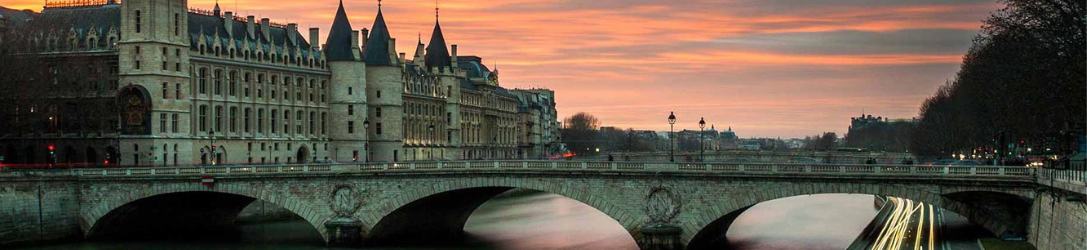
Things to Do in Paris in 2026: The Guide That Reflects What the City Actually Looks Like Now
In December 2024, Notre Dame Cathedral reopened after five years of restoration following the devastating fire of April 2019 that destroyed the spire and much of the roof. The reopened cathedral is not merely restored to what it was; the interior has been transformed by the restoration process into something more luminous, more carefully illuminated, and more extraordinary than the pre-fire building that generations of visitors had known. It is the single most significant development in European cultural tourism in years, and it is the reason this Paris guide is different from every one that predates it.
Paris is also the world's most visited city, the highest-volume travel search destination of any in this content series, and the top aspirational destination for Pakistani travelers planning a European trip. This guide covers everything worth doing; the new Notre Dame, the Eiffel Tower, the Louvre, Versailles, the halal food scene, and the France Schengen visa process specifically for travelers booking from Pakistan. Before planning your trip, don't forget to compare flights from Lahore, Islamabad, and Karachi.
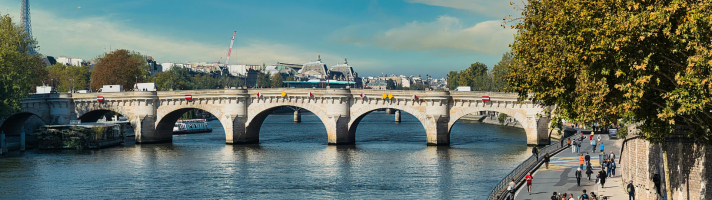
Notre Dame Cathedral — The Most Important New Reason to Visit Paris in 2026
Notre Dame de Paris is the Gothic masterpiece at the heart of the city begun in 1163, completed over two centuries, and the defining image of Île de la Cité, the island in the Seine where Paris began. On 15 April 2019, a fire destroyed the 19th-century spire and burned through the lead roof, sending images of the cathedral in flames to every screen in the world.
What the restored Notre Dame looks like in 2026:
- The 850-year-old stone structure survived the fire intact; the walls, towers, and famous rose windows are original
- The new spire, designed by architect Philippe Villeneuve, is a faithful recreation of the 19th-century original
- The interior has been transformed by the restoration, the stonework has been cleaned to its original pale limestone colour, revealing a cathedral that is lighter and more beautiful than it appeared before the fire for most of living memory
- New lighting throughout the interior illuminates the nave and apse in ways that were architecturally impossible in the darkened pre-fire building
- Free entry but timed entry reservation is strongly recommended to manage queues and preserve the experience quality
- The Paris archaeological crypt beneath the cathedral (Crypte archéologique) has also been renovated worth including
This is the single attraction in Paris in 2026 that no earlier guide describes accurately. Every previous description refers to the darker, soot-coated medieval interior. The current building is genuinely different and genuinely extraordinary.
Eiffel Tower — How to Visit Without Wasting Half a Day in a Queue
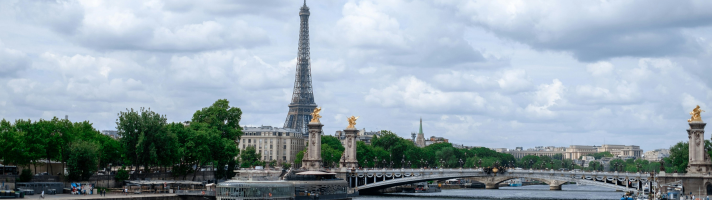
The Eiffel Tower is the world's most visited paid monument approximately 7 million visitors per year and the most photographed structure on earth. At 330 metres, completed in 1889 for the World's Fair, it was the world's tallest man-made structure for 41 years. The experience of standing at the summit with Paris laid out below in every direction is one of the great city views available anywhere.
The honest guide to not wasting your time:
- Book timed-entry summit tickets online at ticket.toureiffel.paris at least 3–4 weeks ahead in peak season. The queue for walk-up tickets regularly exceeds 3–4 hours in summer. With a timed ticket you enter immediately at your slot.
- Three levels: level 1 (57m, restaurants and glass floor section), level 2 (115m, champagne bar), and the summit (276m, panoramic views). The summit is significantly more expensive but the view is categorically better.
- Best times: early morning opening (9am) or evening (after 9pm in summer when the city is illuminated and the tower sparkles on the hour). Sunset from level 2 is the most photographed experience.
- The Trocadéro plaza across the Seine gives the classic straight-on photograph of the tower best in the morning when the light falls on the front face.
- The park below the tower (Champ de Mars) is Paris's best picnic location; buy food from a nearby boulangerie and eat on the grass with the tower above you.
The Louvre — The World's Most Visited Museum and How to Navigate It
The Louvre is the world's largest and most visited art museum; 35,000 works across 60,600 square metres of gallery space. It is genuinely impossible to see more than a fraction of it in one visit, and attempting to do so is how visitors emerge exhausted and disappointed. The correct approach is selective.
What to actually see in the Louvre:
- The Mona Lisa, smaller than almost everyone expects, behind glass, usually surrounded by a crowd three rows deep. See it for the experience of having seen it, then move on to the three other Leonardo da Vinci masterpieces in the same Grande Galerie: The Virgin of the Rocks, Saint John the Baptist, and La Belle Ferronnière. These are equally extraordinary, in much better viewing conditions, and almost always uncrowded.
- Venus de Milo in the Greek antiquities wing, a genuinely remarkable 2nd-century BCE sculpture that deserves more time than the crowds of people rushing past it
- Winged Victory of Samothrace at the top of the Daru staircase. One of the most dramatically positioned sculptures in any museum in the world.
- Richelieu Wing, the least crowded of the three main wings and contains extraordinary Dutch and Flemish paintings, Vermeer, and the French crown jewels
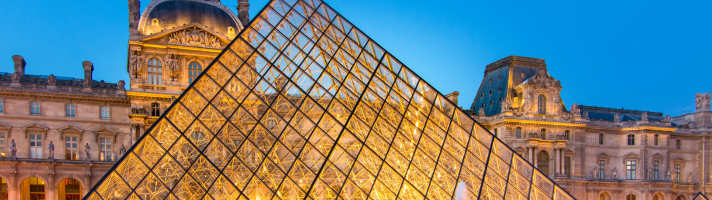
- Book skip-the-line entry at louvre.fr, standard entry requires queuing even with an advance ticket at the glass pyramid entrance. The Richelieu Wing entrance (from the Palais Royal side) consistently has shorter queues.
- A Paris Museum Pass covers Louvre entry worth calculating against individual site prices for your itinerary.
Montmartre and Sacré-Cœur — The Paris That Exists Above the Tourist Trail
Montmartre is the hilltop neighbourhood in northern Paris where Picasso had his first studio, Toulouse-Lautrec painted, and the Moulin Rouge opened in 1889. It remains the most distinctly bohemian part of the city, a network of steep streets, hidden vineyards, and artists' studios that feel genuinely different from the grand Haussmann boulevards below.
How to do Montmartre properly:
- Arrive before 8am at Sacré-Cœur for the sunrise view over Paris from the basilica steps, one of the great city panoramas, completely empty in the early morning
- The basilica itself has free entry and an extraordinary mosaic interior, the largest Christ mosaic in France covers the apse
- Rue des Martyrs running down the south side of the hill is the best food street in the neighbourhood, a genuine Parisian market street with bakeries, fromageries, wine shops, and butchers used by local residents
- Place du Tertre, the famous artists' square is heavily tourist-facing. Visit briefly, but do not buy art here.
- Bateau-Lavoir on Rue Ravignan was where Picasso painted Les Demoiselles d'Avignon in 1907, a historic site with no tourist infrastructure, which is exactly the point
- Take the funicular from Square Louise Michel up to Sacré-Cœur rather than climbing the steps far better views on the way up
Musée d'Orsay — The Impressionist Museum That Rivals the Louvre
The Musée d'Orsay, housed in a converted Beaux-Arts railway station on the Seine, holds the world's finest collection of Impressionist and Post-Impressionist art; Monet, Renoir, Degas, Van Gogh, Cézanne, Gauguin, Seurat. For many visitors it is the single most rewarding museum visit in Paris.
Why it consistently outperforms expectations:
- The collection is focused unlike the Louvre's 35,000-work sprawl, the d'Orsay covers a specific and coherent period (1848–1914) and its greatest works are all accessible in a single visit
- Van Gogh's Bedroom in Arles and Starry Night over the Rhône are both here, the latter specifically is one of the most emotional paintings in any European museum
- The building itself, a 1900 railway station with an enormous glass vault is extraordinary
- Book timed-entry tickets at musee-orsay.fr not as critical as the Louvre but worth avoiding the ticket queue
- Covered by the Paris Museum Pass
Palace of Versailles — The Day Trip That Changes Your Understanding of France
Forty-five minutes south of Paris by RER C train, the Palace of Versailles was the seat of French royal power from Louis XIV to the Revolution of 1789. The Hall of Mirrors, a 73-metre gallery with 357 mirrors reflecting the formal gardens is the defining image. The gardens themselves cover 800 hectares and took 40 years to create.
How to approach Versailles without disappointment:
- Arrive at opening time (9am) Versailles receives 15,000 visitors per day in peak season and the gardens and palace fill quickly
- Book tickets online at chateauversailles.fr queue for walk-up tickets regularly exceeds 2 hours
- Prioritise the State Apartments and Hall of Mirrors inside the palace, then the Grand Trianon (the smaller private royal residence) less crowded and equally beautiful
- The gardens are free on weekdays (weekends require a ticket), a packed lunch from Paris eaten on the Grand Canal is one of the most pleasant experiences in the region
- Covered by the Paris Museum Pass for palace entry (gardens charged separately on weekends)
- Return to Paris by 5pm to avoid the evening commuter crush on the RER
Seine River Cruise — The One Hour That Shows You Everything
A Seine River cruise is not a tourist trap. It is a genuinely useful way to see Paris from a different perspective and to understand how the city is geographically organised and it passes every major landmark in the space of an hour.
What the cruise covers:
- Notre Dame Cathedral and Île de la Cité from the water
- The Eiffel Tower from below the scale from river level is completely different from street level
- Musée d'Orsay and the Tuileries Garden from the Seine
- Pont Alexandre III, the most ornate bridge in Paris, built for the 1900 World's Fair
- Bateaux Mouches departs from Pont de l'Alma and runs hourly, book online for discounted rates
- Evening cruises (departing from 9pm in summer) pass all landmarks fully illuminated, the Eiffel Tower sparkle on the hour is visible from the water
Grande Mosquée de Paris and Halal Food — A Better Picture Than Any Guide Gives
Paris has one of Europe's largest Muslim communities, approximately 10% of the Greater Paris population and a halal food scene that is entirely absent from every mainstream Paris travel guide. For Pakistani travelers, this is the most practically useful section of this guide.
Grande Mosquée de Paris built in 1926 in the Hispano-Moorish style, the Grande Mosquée is one of the most beautiful mosques in Europe. Located in the 5th arrondissement near the Jardin des Plantes, it is open to non-Muslim visitors outside prayer times. The attached tearoom serves excellent North African mint tea, pastries, and couscous, lunch here is one of the most pleasantly unexpected experiences in Paris.
Where the halal food is:
- 18th arrondissement (Barbes, Goutte d'Or) ; the densest concentration of halal restaurants in Paris. North African, Sub-Saharan African, Pakistani, and Turkish restaurants along Boulevard Barbes and surrounding streets. Affordable and genuinely good.
- Near the Grande Mosquée, 5th arrondissement ; halal Moroccan and Algerian restaurants along Rue Mouffetard and Rue du Cardinal Lemoine
- Around Gare du Nord, 10th arrondissement ; South Asian and North African halal restaurants within walking distance of the Eurostar terminal
- Halal-certified boulangeries exist throughout the 18th and 19th arrondissements
- Practical check: Look for the "Halal" sign displayed on restaurant windows throughout these areas, certification display is standard practice
France Schengen Visa for Pakistani Travelers — The Complete Process
France Schengen visa applications from Pakistan are managed through VFS Global on behalf of the French consulate. This is the most-searched question for Pakistani travelers planning Paris and the least clearly answered in existing content.
Where to apply:
- VFS Global France visa centre, Islamabad: Blue Area
- VFS Global France visa centre, Karachi: Clifton
Documents required:
- Valid Pakistani passport (minimum 6 months validity, at least 2 blank pages)
- Completed France Schengen visa application form (available at VFS or online)
- Two passport photographs (Schengen specification 35x45mm)
- Travel insurance (minimum EUR 30,000 medical coverage for the full trip)
- Confirmed flight itinerary
- Confirmed hotel bookings for all nights
- Bank statements (last 3–6 months showing sufficient funds)
- Proof of employment or business registration
- Cover letter with itinerary and purpose of visit
- If employed: NOC from employer and last 3 months salary slips
Timeline: Apply 4–6 weeks before departure. Processing typically takes 10–15 working days. Apply earlier during April–June peak season when VFS appointment slots fill quickly.
Apply for your France Schengen visa through Mosafir.
Best Time to Visit Paris
Paris works across most of the year with two clear windows and one strong specific seasonal reason.
- April to June: the best overall window. Cherry blossoms along the Seine in April, mild temperatures (16–22°C), outdoor café culture at its peak, and the Eiffel Tower gardens genuinely beautiful. Book accommodation 2–3 months ahead as this is the most popular period. To avoid the last minute booking and cost panics always book your stay in advance.
- September to October: golden autumn light, thinner crowds than spring, comfortable temperatures, and the city returning to full life after the August slowdown. Slightly better for museum visits as the summer tour groups have reduced and for better planning and hassle free experience always go for guided tour.
- December: cold (3–8°C) but magical. Christmas markets at La Défense and along the Champs-Élysées, the Galeries Lafayette and Printemps department store window displays, and significantly fewer queues at most major sites.
- Avoid August: contrary to expectation, August is both the hottest and most tourist-crowded month while simultaneously having many local Parisian restaurants closed for summer holidays. The combination of tourist traps as the primary dining option and peak summer crowds at every site makes August the least rewarding month.