Home
Home About Us
 Become a Subscriber

 Flight Booking
 Hotel Booking
 Trip Booking
 Visa Booking
 Booking History
 Blogs
Blogs
 Wishlist
 Support
 Log In



 28 Jul 2026
 0
0 Asma
Asma
Things to Do in Gilgit: Why Pakistan's Mountain Capital Deserves More Than One Night
Every travel guide to Northern Pakistan makes the same mistake. It lists Gilgit as a transit point; the city you fly into, spend one night, and move on from to reach Hunza or Skardu or Fairy Meadows. This guide makes a different argument: Gilgit is a destination in its own right, and the travelers who discover that tend to stay longer than planned.
The Kargah Buddha, a 7th-century rock carving on a cliff face above a gorge is one of the finest examples of Buddhist art in South Asia and is seen by a fraction of the people who drive past it on the way somewhere else. Naltar Valley, two hours from the city, has three lakes of a blue so vivid they look artificially coloured in photographs and even more extraordinary in person. The Gilgit River runs with Grade III–IV rapids that a growing number of operators are running guided rafting trips on. And the Karakoram Highway, the world's highest paved road begins here.
Book flights from Islamabad to Gilgit and Lahore to Gilgit on Mosafir.
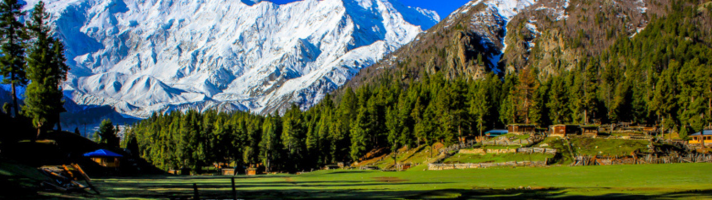
Naltar Valley and the Three Blue Lakes — Worth the Jeep Ride Alone
Two hours from Gilgit by jeep, Naltar Valley sits at over 3,000 metres and contains three lakes of such an extraordinary blue that first-time visitors consistently assume the photographs have been edited. They have not. The colour is real — a function of glacial meltwater and mineral content — and it changes through the day as the angle of light shifts.
Why it anchors every Gilgit visit:
- Three distinct lakes; Naltar Lake, Bashkiri Lake, and Phari Lake; each with slightly different colouring
- Pakistan's premier ski resort in winter, one of the very few genuine ski destinations in the country
- Wildflowers across the valley floor in spring and summer
- Largely free of the crowds that reach the more famous Northern Pakistan sites
- Full-day excursion from Gilgit, hire a jeep in the city for the return journey or book guided tours in advance
- Altitude: carry warm layers even in summer, temperatures drop significantly at the lakes
Kargah Buddha — 7th-Century Silk Route History Carved Into a Cliff
Five kilometres from central Gilgit, the Kargah Buddha is a 7th-century rock carving of a standing Buddha figure cut into a cliff face above a narrow gorge. It is one of the most significant archaeological sites in Gilgit-Baltistan, a direct remnant of the Buddhist civilization that dominated this Silk Route corridor before Islam arrived, and it receives a fraction of the attention it deserves.
What makes it worth the stop:
- 7th century carved over 1,300 years ago by the Buddhist communities of the Silk Route
- Standing Buddha figure approximately 4 metres tall, carved directly into the rock face
- The gorge setting below the carving is itself dramatic and worth the walk to the viewpoint
- Historical context: Gilgit was a major Buddhist centre before its conversion to Islam in the 11th century- the carving is physical evidence of that entire chapter of history
- Free to visit, short drive from central Gilgit, walkable from the road to the viewpoint
Rakaposhi Viewpoint, Nagar Valley — One of Pakistan's Greatest Mountain Views
About 75 km from Gilgit on the Karakoram Highway, a roadside viewpoint in Nagar Valley offers what is consistently described as one of the most dramatic single mountain views in Pakistan. Rakaposhi stands at 7,788 metres and rises almost vertically from the valley floor — the vertical gain from base to summit is one of the most extreme of any peak on earth, which means the mountain appears at an impossible scale from below.
Why it is worth the drive:
- Rakaposhi rising directly above the valley floor, one of the steepest visible mountain faces in the Karakoram
- The viewpoint has basic facilities- chai shops and a small rest area
- Best combined with a Karakoram Highway drive toward Hunza; the viewpoint is on the main road
- Photograph in the morning before cloud builds around the upper peak
- Golden hour (late afternoon) produces extraordinary light on the snow face
Gilgit River White Water Rafting — The Adventure Nobody Mentions
The Gilgit River runs through the city with Grade III–IV rapids that are among the most accessible white water in Pakistan's north. Local operators run guided half-day and full-day rafting trips from points along the river, making it one of the few adventure activities in Northern Pakistan that does not require a multi-day trek commitment.
What to know before you go:
- Grade III–IV rapids, suitable for beginners with a guide, genuinely thrilling for experienced rafters
- Half-day trips (3–4 hours on the water) and full-day options both available
- All equipment provided; life jacket, helmet, paddle, wetsuit if required
- Book through tour operators in Gilgit bazaar, do not arrange independently
- Best season: late spring through early autumn (May–September) when water levels are optimal
- The river approach also gives views of the surrounding peaks not visible from road level
Kargah Buddha, Silk Route Rock Carvings — The World's Greatest Outdoor Art Gallery
Along the Karakoram Highway between Gilgit and Chilas, thousands of petroglyphs and Buddhist inscriptions carved into boulders represent one of the highest concentrations of ancient rock art in the world. These carvings by Buddhist monks, Silk Route traders, Zoroastrian travelers, and local communities over a span of 2,000 years document the full sweep of cultural exchange on this ancient corridor more vividly than any museum.
Why serious travelers rate this above more famous sites:
- Over 30,000 individual inscriptions and carvings documented along the highway
- Range from 2nd-century Buddhist stupas to 15th-century Islamic calligraphy
- Most visible and accessible near Chilas approximately 2 hours south of Gilgit
- Best visited with a guide who can identify the historical periods of specific carvings
- Combines naturally with a Karakoram Highway road trip toward Islamabad
Gilgit Polo Ground — Where Pakistan's Most Thrilling Sport Is Played for Free
Polo in Gilgit-Baltistan is a completely different game from the sport played on manicured English lawns. Local polo is fast, rough, played without helmets, and accompanied by drums and shehnai musicians at the sideline. The Gilgit polo ground hosts matches particularly during festivals, and attendance is free.
What makes it worth watching:
- Local polo is played at a speed and physical intensity that international polo does not match
- Live musical accompaniment adds a cultural dimension absent from the sport elsewhere
- Festival matches particularly around Independence Day and local celebrations draw large crowds and the most competitive play
- The polo ground is a short walk from the Gilgit bazaar area
- Players and horses are visible at the ground during training sessions outside match days
Khalti Lake, Ghizer Valley — The Lake That Requires Effort and Rewards It
About 130 km from Gilgit in the Ghizer Valley, Khalti Lake is an emerald-coloured lake at 2,100 metres surrounded by forested hill significantly less visited than the Kachura Lakes or Naltar, and better for it. The approach through Ghizer Valley is one of the most scenic drives in Gilgit-Baltistan, passing through villages and forests that feel genuinely off the beaten track.
Why it belongs on a 5-day Gilgit itinerary:
- Emerald lake colour from glacial silt distinct from the blue of Naltar
- Camping, trout fishing, and boating available at the lakeside
- The Ghizer Valley drive passes through Phunder Lake and Teru Meadows multiple stops on a single journey
- Significantly quieter than more famous Northern Pakistan lakes
- Full-day excursion from Gilgit start early, the return drive in evening light is exceptional
Gilgit as Gateway — Where to Go Next
The research is right about one thing: Gilgit is the hub for Northern Pakistan's most extraordinary destinations. After seeing Gilgit itself, these are the natural extensions:
- Hunza Valley — 2.5 hours by road on the Karakoram Highway. Rakaposhi, Altit Fort, Baltit Fort, Attabad Lake. The most famous destination in Northern Pakistan.
- Fairy Meadows and Nanga Parbat — full-day journey from Gilgit via Raikot Bridge. Camping on the meadow with Nanga Parbat directly above is one of Pakistan's defining experiences.
- Skardu — 5–6 hours by road or a 30-minute flight (GIL-KDU). Shangrila Resort, Deosai Plains, the K2 trek route.
- Chitral and Kalash Valleys — accessible by road via the Shandur Pass (seasonal) or by flight.
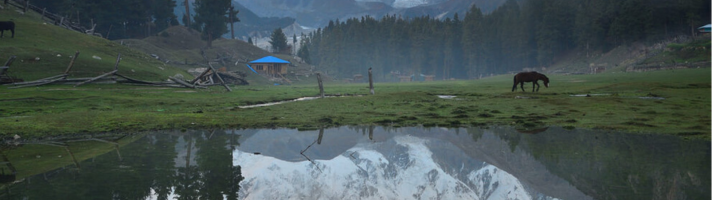
Best Time to Visit Gilgit
Four seasons, four different reasons to go but whenver you go just don't forget to book your accommodation in advance.
- Spring (March–May): cherry and apricot blossoms across the valleys. Mild temperatures. The most visually spectacular season in the orchards.
- Summer (June–August): full access to all high passes, meadows, and glacier day trips. Peak trekking season. Book accommodation and jeeps in advance.
- Autumn (September–November): golden foliage, thinner crowds, extraordinary photography conditions. Often the most underrated season.
- Winter (December–February): Naltar Valley ski season. Dramatic snow landscapes. Most high passes closed. For skiers specifically, the only season that matters.