Home
Home About Us
 Become a Subscriber

 Flight Booking
 Hotel Booking
 Trip Booking
 Visa Booking
 Booking History
 Blogs
Blogs
 Wishlist
 Support
 Log In



 07 Jul 2026
 0
0 Asma
Asma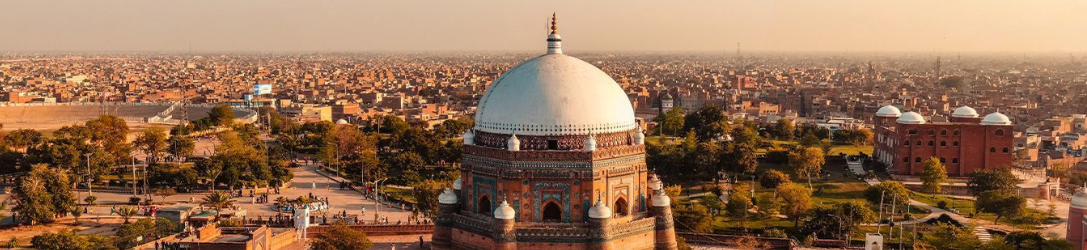
What to Do in Multan: The Complete 2026 Guide to Shrines, Food and Blue Pottery
Multan does not appear on enough itineraries, and that is genuinely a loss for everyone who skips it. Pakistan's ancient City of Saints is one of the oldest continuously inhabited cities in South Asia; over 5,000 years of history compressed into a compact old city where two of the subcontinent's finest Sufi shrines, a hilltop fort, a colonial clock tower, and Pakistan's most distinctive handicraft tradition exist within walking distance of each other. Add a dessert found nowhere else in the country, a mango festival that turns July into a reason to visit despite the heat, and domestic flights from Islamabad, Karachi, and Lahore that make it a real weekend option and the only reasonable question is why you have not been yet.
This guide covers the best things to do, when to go, what to eat, and how to plan one or two days that actually do Multan justice. Book flights to Multan on Mosafir at Karachi to Multan, Lahore to Multan, Islamabad to Multan.
Shrine of Shah Rukn-e-Alam — The Blue Dome That Defines Multan
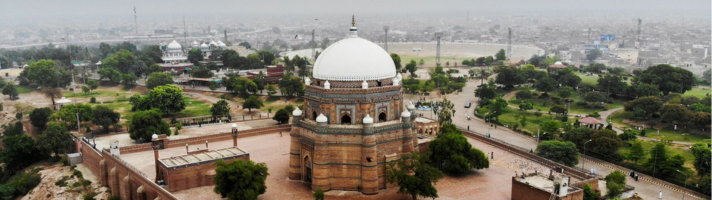
he moment you see it, you understand why Multan is called the City of Saints. The Shrine of Shah Rukn-e-Alam is a 14th-century Tughlaq masterpiece; one of the finest examples of medieval Islamic architecture in South Asia, and the image most associated with Multan worldwide.
Why it belongs at the top of your list:
- Iconic octagonal mausoleum with a massive blue-and-white tiled dome
- One of the finest examples of Tughlaq architecture in the subcontinent
- Active place of pilgrimage; deeply atmospheric at dawn and after sunset
- Free entry, dress modestly, remove shoes before entering
- Allow at least 45 minutes; more if you visit during evening qawwali
Shrine of Bahauddin Zakariya — Older, Quieter, Equally Extraordinary
Less than a kilometre away and consistently less crowded, the 13th-century Shrine of Bahauddin Zakariya predates Shah Rukn-e-Alam and is among the earliest surviving examples of Multani architecture. Visit both in the same morning — the contrast between the two is part of the experience.
Why it deserves equal time:
- Built in the 13th century; older than Shah Rukn-e-Alam
- Centre of the Suhrawardi Sufi order that shaped Punjab's religious culture
- Red brick exterior with blue tile ornamentation quieter and more austere
- Almost always less crowded than its famous neighbour
- Free entry, same dress code applies
Multan Fort — The View Every Visitor Misses
Kohna Fort sits on a hilltop above the old city and gives the only aerial perspective on how Multan is actually laid out. Two important shrines sit inside the fort walls. Most visitors skip it. That is a mistake.
Why the fort earns a stop:
- Panoramic views across the old city rooftops
- Shah Yusuf Gardezi Shrine and Bibi Pak Daman Shrine inside the complex
- Damdama viewpoint platform, best photography spot in Multan
- Qasim Garden at the base for a shaded approach
- Entry approximately PKR 200, best visited in the morning
Hussain Agahi Bazaar — Where You Buy the Blue Pottery
Multan's most famous market is where the city's craft identity is most concentrated. Blue pottery, ajrak cloth, camel skin lamps, and sohan halwa; all in one dense, navigable stretch of the old city. Buy from workshops, not stalls.
What makes it worth a full morning:
- Multani blue pottery; hand-painted, centuries-old tradition unique to this city
- Ajrak block-printed cloth in deep red and blue
- Sohan halwa shops including the famous Hafiz Sohan Halwa
- Live pottery workshops where you can watch craft being made
- Best visited in the morning before afternoon heat sets in
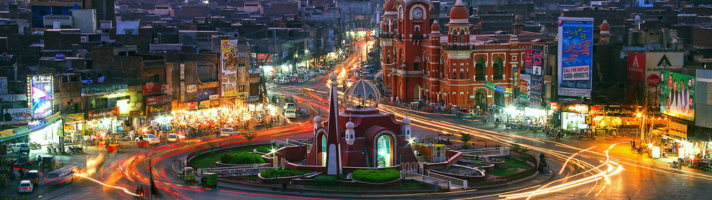
Ghanta Ghar — The Clock Tower and the Street Food Around It
The British colonial-era Ghanta Ghar sits at the heart of the old city bazaars and is both a landmark and a navigation point. The real reason to spend time here is not the tower, it is everything around it.
Why the Ghanta Ghar area earns an evening:
- Indo-Saracenic colonial clock tower in the heart of the old city
- Densest concentration of street food stalls in Multan
- Daal samosa; Multan's signature street food, best eaten hot from the oil here
- Blue pottery and ajrak shops line the surrounding lanes
- Most alive in the early evening, come after 6pm
Note: It is always the best idea to book guided tours in advance to avoid the hassle.
Multan Museum — The Context That Makes Everything Else Make Sense
Most visitors walk past the Multan Museum. The ones who go in understand the shrines, the fort, and the bazaars better for it. One hour here before you visit anything else is genuinely worth it.
What the museum covers:
- Indus Valley era pottery and Gandharan Buddhist sculpture
- Islamic art and coins from successive ruling dynasties
- Dedicated Multan blue pottery gallery
- Housed in the historic Damdama building near the fort
- Closed on Mondays
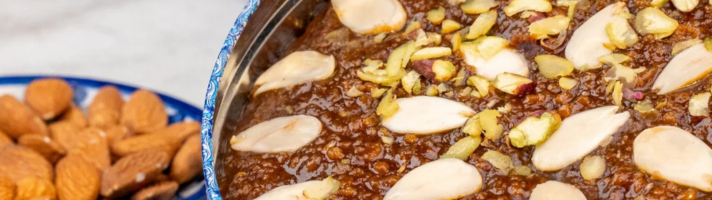
Sohan Halwa — The One Thing You Take Home
Multan's most famous food is not a meal, it is a sweet. Sohan halwa is a dense, chewy confection made from wheat starch, clarified butter, sugar, and cardamom, studded with pistachios and almonds and finished with silver leaf. It exists nowhere else in Pakistan in this form.
Why it is non-negotiable:
- Dense, chewy texture unlike any other Pakistani mithai
- Hafiz Sohan Halwa near Hussain Agahi Bazaar is the most trusted name
- Buy it fresh, eat some immediately, take the rest home, it travels well
- Makes the most appreciated food gift from any Multan trip
- Available in gift packaging throughout the bazaar
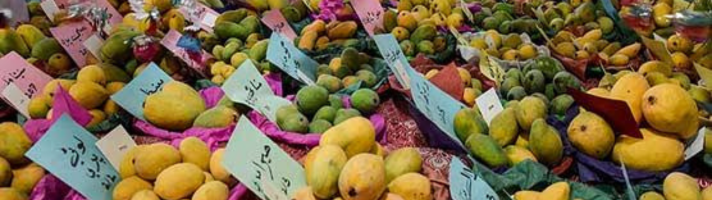
Multan Mango Festival — July Only, Worth Planning Around
Every July, Multan hosts a Mango Festival celebrating Pakistan's extraordinary mango variety, over 1,000 types grown across the country, with the Punjab producing a significant share. The heat is extreme but the experience is unique.
Why July visitors should plan around it:
- Pakistan grows over 1,000 mango varieties, the festival showcases the best
- Tastings, variety comparisons, and farmer-direct purchasing
- Chaunsa, Anwar Ratol, Sindhri at peak ripeness not available elsewhere like this
- Daytime temperatures above 42°C; plan all outdoor activity before 9am or after 7pm
- The only event of its kind in Pakistan's food calendar
Best Time to Visit Multan
Two windows, two completely different reasons to go.
- October to March: mild temperatures, comfortable outdoor sightseeing, shrines most atmospheric in cool evenings. The right window for first-time visitors.
- July: extreme heat (42°C+) but the Mango Festival makes it worth it for flexible travelers. All outdoor activity before 9am or after 7pm.
- April to June and August to September: avoid. Extreme heat with no seasonal upside.
- December and January mornings can be cold, bring a layer.
Whenever you plan to visit, don't forget to book your stay in advance.