Home
Home About Us
 Become a Subscriber

 Flight Booking
 Hotel Booking
 Trip Booking
 Visa Booking
 Booking History
 Blogs
Blogs
 Wishlist
 Support
 Log In



 20 Jul 2026
 0
0 Asma
Asma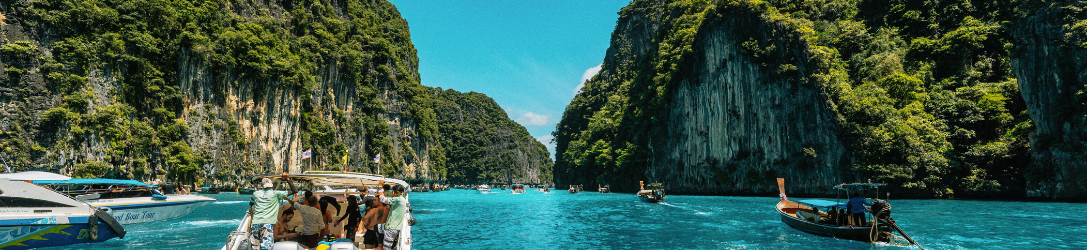
Is Bangkok Worth Visiting? What Pakistani Travelers Need to Know Before They Go
Bangkok is the world's most visited city by international arrivals in most years which is either the best possible endorsement or a reason for suspicion depending on how you feel about crowds. This guide gives you the honest answer specifically for Pakistani travelers: what is genuinely worth your time, what is overhyped, how the Thailand visa works, where the halal food is, and how to spend three or four days without wasting any of them.
The short answer is yes. The longer answer is everything below.
Book flights from Pakistan to Bangkok on Mosafir: Lahore to Bangkok, Islamabad to Bangkok, Karachi to Bangkok.
Bangkok Is Actually Three Cities — Here Is How to Think About It
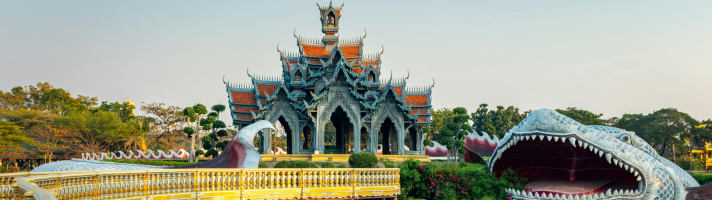
Every Bangkok guide lists the same temples and the same markets. What they miss is that Bangkok operates simultaneously at three completely different registers, and understanding which one you are in at any given moment makes the city make more sense.
Ancient royal Bangkok; the Grand Palace, Wat Pho, Wat Arun, the Chao Phraya River. This is the Bangkok of golden spires, Emerald Buddhas, and 1,000-year architectural history. It exists in the oldest part of the city on Rattanakosin Island and is genuinely extraordinary.
Modern cosmopolitan Bangkok: Sukhumvit, Silom, the Mahanakhon Tower skywalk, the BTS Skytrain threading between glass buildings. This is a world-class contemporary Asian city that happens to exist in the same map coordinates as the ancient one.
Street Bangkok, Chinatown Yaowarat at midnight, the weekend chaos of Chatuchak Market, longtail boats through the klongs, floating markets an hour outside the city. This is the Bangkok that runs on its own schedule and rewards patience.
Most first-time visitors spend all their time in the first and feel they have missed something. The ones who come back go for the third. The best three-day trips cover all of them.
Tip for you: Always book your stay in advance and go for guided activities.
Grand Palace and Wat Phra Kaew — Start Here, Arrive Early
The Grand Palace complex is Bangkok's most visited attraction and the correct first stop on any first visit. Built in 1782 as the official residence of the Thai royal family, the complex covers 218,000 square metres of golden spires, ornate pavilions, and ceremonial halls. At its centre, the Temple of the Emerald Buddha (Wat Phra Kaew) houses a 45-centimetre jade Buddha — one of the most revered religious objects in Thailand — whose royal robes are changed three times a year by the King himself.
What to know before you go:
- Arrive at 8:30am when the gates open; the Grand Palace receives thousands of visitors daily. The first 90 minutes are dramatically less crowded than 10am onwards.
- Dress code is strictly enforced- covered shoulders and knees required. No exceptions. Sarong rentals available at the gate if you arrive underprepared.
- Entry fee: 500 THB per adult, approximately PKR 4,000. Includes access to the Queen Sirikit Museum of Textiles inside the complex.
- Allocate 2–2.5 hours minimum, the complex is larger than it appears on maps.
- Photography is permitted throughout except inside the Emerald Buddha temple itself.
Wat Pho — The Reclining Buddha and the Best Thai Massage in Bangkok
A short walk from the Grand Palace, Wat Pho is Bangkok's oldest and largest temple and the more immediately impressive of the two for many visitors. The 46-metre gold Reclining Buddha, housed in a long narrow building that barely contains it, is one of the most visually extraordinary religious images in Southeast Asia. The soles of the feet alone are 5 metres tall, inlaid with mother-of-pearl in 108 auspicious designs.
Wat Pho is also the official birthplace of traditional Thai massage. The temple complex has operated a massage school since the 19th century and the adjacent massage pavilions offer treatments at very reasonable prices approximately 300–500 THB for one hour.
- Entry fee: 200 THB per adult
- Open 8am to 6:30pm daily
- Visit immediately after the Grand Palace both are on Rattanakosin Island and walkable between
Wat Arun — Photograph It at Sunset, Not at Noon
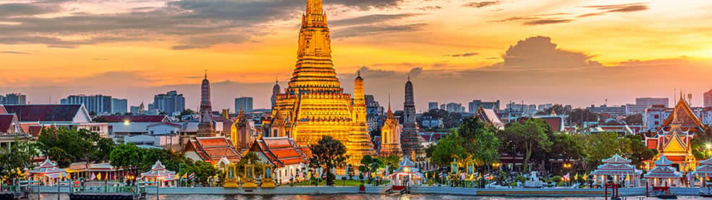
The Temple of Dawn, Wat Arun sits on the west bank of the Chao Phraya River, directly opposite the Grand Palace area. Its 70-metre central prang (tower) is covered entirely in fragments of Chinese porcelain and coloured glass that catch the light differently at every hour of the day. It is one of the most photographed structures in Thailand and earns every photograph.
The honest assessment of timing:
- Best photographed from the opposite bank at sunset, the river taxi from Tha Tien pier (near Wat Pho) crosses to Wat Arun for 5 THB. Sunset from across the river is the image you have seen everywhere. The temple is more crowded from the riverbank than it appears in photographs arrive by 5pm to get a clear view.
- Best visited in the morning for climbing the steep central prang and exploring the temple grounds without crowds
- Entry fee: 100 THB per adult, the most affordable of the major Bangkok temples
- Combine with a Chao Phraya longtail boat ride to reach it, the boat approach gives the most dramatic arrival
Chinatown Yaowarat — Come After 8pm, Come Hungry
Yaowarat Road is Bangkok's Chinatown and its best-known street food destination, a dense, loud, brilliantly lit street where seafood restaurants, dim sum houses, roasted duck vendors, and dessert stalls create a continuous sensory experience that runs until 2am or later. It is the clearest expression of Bangkok's street city register and the single best food experience in the city for most visitors.
What to order and how to navigate it:
- Boat noodles; small bowls of intensely flavoured noodle soup with pork or beef and a complex broth. Order multiple bowls — they are small by design.
- Roasted duck and pork, the hanging roasted meats at the shopfront restaurants are the visual signature of Yaowarat. Order a mixed plate with rice.
- Mango sticky rice; warm glutinous rice with fresh mango and coconut cream. Available at dedicated dessert stalls along the main road.
- Halal note: Chinatown Yaowarat is not a halal area. For Pakistani travelers, the halal equivalent night food experience is Sukhumvit Soi 3 (the Arab Quarter); Middle Eastern and South Asian restaurants, shawarma, halal grills, and a familiar atmosphere. Equally good, fully halal.
- Arrive by 8pm; the street takes time to reach full energy and is at its best between 9pm and midnight.
Chatuchak Weekend Market — The Largest Market You Will Ever See
Chatuchak Weekend Market is one of the world's largest outdoor markets over 15,000 stalls across 35 acres selling clothing, antiques, plants, art, street food, books, vintage items, pets, and essentially everything else. It operates only on Saturday and Sunday, from approximately 9am to 6pm.
How to approach it without being overwhelmed:
- It is genuinely enormous, a full day is not excessive
- The market is divided into numbered sections, Section 26 for clothing and fashion, Section 1 for antiques, Sections 2–4 for home décor, the food area near the main clock tower for the best quick meals
- Arrive by 9am before the midday heat makes the non-air-conditioned lanes uncomfortable
- Download a Chatuchak market map before going, the signage inside is better than it used to be but the map saves significant time
- BTS Skytrain to Mo Chit station, or MRT to Chatuchak Park station both walking distance from the main entrance
- Halal food stalls exist throughout the market look for stalls displaying halal certification, concentrated near the Muslim prayer room in the market grounds
Mahanakhon Tower — Bangkok's Highest View and Its Most Dramatic Floor
The Mahanakhon Tower observation experience is one of the few in the world that is genuinely better than the photographs suggest. The 78th-floor open-air rooftop gives 360-degree views across the entire Bangkok basin. The 74th-floor glass tray a section of entirely transparent floor extending over the Bangkok skyline is as uncomfortable as it looks and worth doing anyway.
What makes it different from generic observation decks:
- Glass-floored sections on level 74, you are looking straight down 300 metres to the street
- Level 78 open-air rooftop, Bangkok's highest outdoor viewing point, no glass between you and the city
- Tickets: approximately 880 THB per adult (PKR 7,000), pre-book online for the best price and to guarantee entry
- Best visited in the late afternoon and staying through sunset; the transition from golden light to the city's night illumination is extraordinary
- Located in the Silom area, BTS Skytrain to Chong Nonsi station, five minutes walk
Floating Markets — Worth It If You Go to the Right One
Bangkok's floating markets are among the most photographed experiences in Thailand and among the most frequently disappointing when poorly planned. The honest assessment:
Damnoen Saduak, the most famous floating market, 90 minutes from Bangkok. Very beautiful, very photogenic, very tourist-facing. Most of the vendors know the market is a performance for cameras rather than a functioning commercial market. Worth seeing once for the visual experience. Go early (7am) or accept the crowds.
Amphawa, 90 minutes from Bangkok, smaller, significantly more authentic, open only on Friday afternoons and weekends. The evening market with food boats on the canal is the best version of the floating market experience available near Bangkok. If your dates align with a weekend, Amphawa over Damnoen Saduak every time.
Talad Rot Fai (Train Market), Bangkok, technically not a floating market but the weekend night market near Chatuchak that most Bangkok residents actually visit. Vintage goods, street food, live music, very affordable. Requires no day trip accessible by BTS
Khao San Road — Go Once, Briefly, With Low Expectations
Khao San Road is Bangkok's famous backpacker street, an approximately 400-metre stretch of guesthouses, street food stalls, bars, and market vendors that has been the entry point for budget travelers to Southeast Asia for decades. It is loud, chaotic, and extremely tourist-facing.
The honest assessment:
- Worth walking through once in the evening for the spectacle
- Not where you should stay or where you should eat, better options exist for both across the city
- The street food stalls closest to the main road are significantly more expensive than equivalent food a block away
- Historically interesting as a cultural phenomenon this is where budget Southeast Asia travel was invented in the 1980s
- If your hotel is nearby, convenient; if not, a specific trip from central Bangkok is not necessary
Getting Around Bangkok
Bangkok has excellent transport infrastructure once you understand which system covers which area.
- BTS Skytrain: elevated rail covering Sukhumvit, Silom, and the Chatuchak area. Clean, fast, air-conditioned, and the backbone of modern Bangkok transport. Buy a Rabbit Card for contactless payment across multiple journeys.
- MRT: underground metro covering the old city, Chinatown (Hua Lamphong), and Chatuchak. Connects with BTS at several interchange stations.
- Grab: essential. Use it for everything the rail does not cover, for temple areas, and for any journey after midnight. Metered taxis exist but Grab eliminates the fare negotiation that makes standard Bangkok taxis frustrating for first-time visitors.
- Chao Phraya River taxi; the most efficient and atmospheric way to reach Rattanakosin Island (Grand Palace, Wat Pho), Wat Arun, and the riverside areas. Orange flag boats are the unlimited-journey tourist passes at 150 THB per day — excellent value.
- Tuk-tuks, iconic but not recommended for actual transport. Fares are rarely cheaper than Grab and the journey quality is inconsistent. Use them once for the experience, not for navigation.
- Suvarnabhumi Airport (BKK) to city: Airport Rail Link to Phaya Thai station in 30 minutes, 45 THB. Grab from the airport costs approximately 300–500 THB depending on destination and traffic.
Best Time to Visit Bangkok
Four distinct periods, two clear windows.
- November to February, the best window by a significant margin. Temperatures are 25–32°C, humidity is lower than the rest of the year, and rain is infrequent. This is when Bangkok is at its most comfortable for outdoor temple visits and day trips. Peak tourist season — book accommodation ahead.
- March to May, increasingly hot (35–40°C by April) with high humidity. Songkran water festival in mid-April is extraordinary if you are specifically attending it, the entire city becomes a water fight for three days. For first-time visitors wanting temple sightseeing, avoid April.
- June to October: monsoon season. Heavy afternoon and evening rain, sometimes flooding in low-lying areas. Indoor attractions (malls, museums, Mahanakhon Tower) are unaffected. The city functions but outdoor plans require significant flexibility.
- Eid travel windows: Bangkok is a popular Eid holiday destination for Pakistani families. If traveling during Eid, book flights and accommodation two to three months ahead — prices increase significantly and availability tightens.
So, don't wait get you Visa and plan your colourful and exciting trip to Bangkok NOW!