Home
Home About Us
 Become a Subscriber

 Flight Booking
 Hotel Booking
 Trip Booking
 Visa Booking
 Booking History
 Blogs
Blogs
 Wishlist
 Support
 Log In



 14 Jul 2026
 0
0 Asma
Asma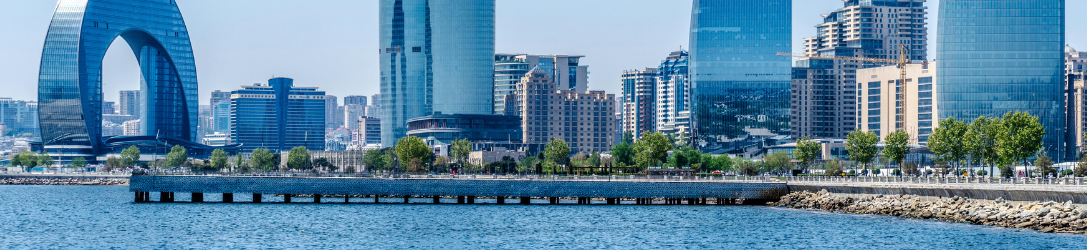
Things to Do in Baku: Why This Caspian Capital Deserves to Be on Every Pakistani Traveler's List
Pakistani travelers have been quietly discovering Baku for several years now, and the word is getting out for good reason. Azerbaijan's capital is a Muslim-majority country where halal food is the default in every restaurant, the e-visa costs $25 and processes in three working days, a direct flight from Islamabad makes it genuinely accessible, and the city itself delivers something that surprises almost every first-time visitor — a UNESCO-listed medieval Old City sitting in the literal shadow of three futuristic skyscrapers that light up as giant flames every night.
No other international destination at this price point offers this combination for Pakistani travelers. This guide covers everything worth doing, skimmably.
Book flights from Pakistan to Baku on Mosafir: Lahore to Baku, Karachi to Baku.
Why Baku Works Especially Well for Pakistani Travelers
Before the attractions, the practical case, because it is unusually strong.
- Muslim-majority country — Azerbaijan is approximately 96% Muslim. Halal food is not a question you need to ask. It is simply how food works here.
- E-visa — no embassy visit, no complex documentation. Apply with Mosafir, receive approval in 3–4 working days. The most straightforward visa process of any international destination for Pakistani passport holders.
- Direct flight from Islamabad — approximately 4 hours 30 minutes (ISB–GYD). No stopover required.
- Affordable by international standards — significantly cheaper than Western Europe, comparable to Dubai for mid-range travel but with far less tourist pricing on food and local transport.
- Familiar cultural context — mosques throughout the city, Ramadan observed, no alcohol pressure, conservative dress respected without being enforced at tourist sites.
- Pakistani community — a growing Pakistani expat and visitor community in Baku means Urdu is increasingly understood in hospitality settings.
Icherisheher Old City — The UNESCO Walled City You Could Spend a Full Day In
Icherisheher is the medieval walled city at the heart of Baku — a UNESCO World Heritage Site of narrow cobblestone alleys, ancient caravanserais, mosques, and centuries of compressed history that has somehow survived into the modern city completely intact. Walking into Icherisheher through one of its arched gates is an immediate sensory shift from the wide boulevards of modern Baku to lanes barely wide enough for two people to pass.
Why it anchors every Baku visit:
- UNESCO World Heritage Site; one of the best-preserved medieval walled cities in the Caucasus region
- Maiden Tower (Qiz Qalasi) stands 29.5 metres at the heart of the Old City — origin still debated by historians, which makes it more interesting
- Palace of the Shirvanshahs; a 15th-century royal complex inside the Old City walls, the finest medieval architecture in Baku
- Ancient caravanserais that once served Silk Road trading routes, now converted to restaurants and workshops
- Allow a full half-day minimum, the alleys reward wandering without a specific route
- Entry to the Old City itself is free, the Maiden Tower and Palace of the Shirvanshahs have modest entry fees
Flame Towers — Best Seen from Highland Park at Sunset
The Flame Towers are the image of modern Baku — three glass skyscrapers shaped like the flames of a fire, rising 190 metres above the city. After dark they function as a giant LED display, showing animated flames, the Azerbaijani flag, and seasonal designs across all three buildings simultaneously.
Why they are best viewed from above rather than below:
- The Flame Towers from street level are impressive but the LED display only reads properly from a distance
- Highland Park, the hilltop garden above Icherisheher, gives the best elevated view across the entire city including the Towers, the Caspian Sea, and the Old City rooftops below
- Take the funicular up to Highland Park, it operates from near the Old City gate and costs almost nothing
- Time your arrival for 30 minutes before sunset and stay through the LED display, the transition from golden light to LED flames is the best version of both
- The walkway along Highland Park looking down over Baku is one of the finest free viewpoints of any city in the region
Heydar Aliyev Center — The Building That Does Not Look Real
The Heydar Aliyev Center was designed by Zaha Hadid and completed in 2012. It has since become one of the most recognisable buildings in the world, a sweeping, undulating white structure with no straight lines or sharp angles anywhere in its exterior, as if the building has been folded from a single continuous surface. It houses rotating exhibitions of Azerbaijani culture, history, and art.
Why it earns a half-morning:
- Widely considered Zaha Hadid's most successful realised building
- The exterior alone justifies the taxi ride, architecture photography does not do it full justice until you are standing in front of it
- Interior exhibitions change regularly, check the current programme before visiting
- Located outside the city centre, approximately 15–20 minutes by Bolt from Icherisheher
- Entry fee is modest; the exterior grounds are free to walk
Gobustan National Park — Ancient Rock Art and Mud Volcanoes
Approximately 60 km south of Baku, Gobustan National Park contains over 6,000 rock art carvings dating back up to 12,000 years; images of animals, humans, boats, and ceremonies etched into stone by the earliest inhabitants of the region. Adjacent to the park, the mud volcanoes of Gobustan are among the world's most accessible cold mud bubbling quietly out of the earth in a landscape that looks lunar and feels prehistoric.
Why it is the non-negotiable day trip:
- UNESCO-listed rock art among the oldest and most significant in the region
- Cold mud volcanoes unique to this area, cold, safe to approach, genuinely extraordinary
- The museum at the park entrance is well-curated and gives the rock art historical context
- Best done as a guided day tour from Baku that combines Gobustan, Ateshgah, and Yanar Dag in a single day, approximately 6–7 hours total
- Independent visit is possible but the guided tour adds significantly more context at the rock art sites
- Book through a Baku tour operator or your hotel most offer this day trip as a standard option
Ateshgah Fire Temple — Where Zoroastrians Worshipped the Eternal Flame
About 30 km from central Baku on the Absheron Peninsula, the Ateshgah Fire Temple is a 17th–18th century Zoroastrian sanctuary built around a naturally burning gas vent that has been burning for centuries. The flame at the centre of the temple still burns — fed now by a gas pipeline rather than the natural vent, which extinguished in the 19th century, but the structure and atmosphere remain extraordinary.
Why it belongs on the itinerary:
- One of the most unusual sacred sites in the world, a fire temple built around a natural eternal flame
- Reflects Azerbaijan's pre-Islamic identity as the Land of Fire (Azer = fire in Azerbaijani)
- Well-preserved complex with monks' cells, a caravanserai, and the central altar
- Best combined with Gobustan and Yanar Dag on the same day all three are on or near the Absheron Peninsula
- Entry fee is minimal approximately 2 AZN
Yanar Dag — Worth Seeing, Not Worth a Separate Trip
Yanar Dag: Burning Mountain, is a hillside on the Absheron Peninsula where natural underground gas has been burning continuously for centuries. The flame is real, continuous, and genuinely striking at night. It is also roughly 10 metres wide, which makes it smaller than most photographs suggest.
The honest assessment:
- The flame itself is impressive and the phenomenon is genuinely unusual; underground gas burning at the surface
- Best seen at dusk or after dark when the flame is most visible
- Not worth a dedicated trip from the city, combine it with Ateshgah and Gobustan on the same day
- A 20-minute stop is sufficient, it is a quick and memorable sight, not a half-day attraction
- Located 25 km from central Baku, easy to include on the Absheron Peninsula day
Baku Boulevard and the Caspian Seafront
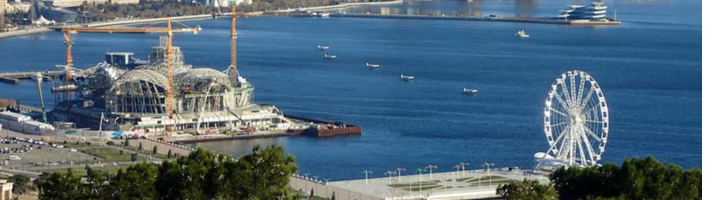
The Baku Boulevard is a 3 km promenade along the Caspian Sea that functions as the city's main public leisure space; wide, well-maintained, lined with cafes, gardens, and views across the Caspian that remind you Baku is an actual seaport, not just an inland city with aspirations.
What the Boulevard offers:
- 3 km of waterfront walking entirely free and accessible at all hours
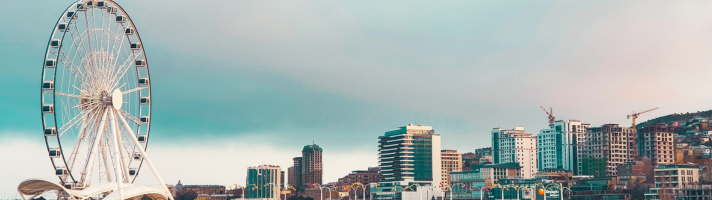
- Baku Eye; the Ferris wheel at the southern end, worth a ride for aerial views over the Caspian
- Mini Venice; a small artificial canal system that is tourist-facing but charming in the evening
- Carpet Museum sits directly on the Boulevard- a carpet-shaped building housing over 10,000 pieces of Azerbaijani textile art, one of the world's great textile collections
- Evening atmosphere is particularly pleasant; Bakuvians use the Boulevard the way Lahoris use Liberty Market
Azerbaijani Food — What to Order and Where
Azerbaijan's food culture is one of the most underrated in the region. For Pakistani travelers, the flavors are familiar in structure; lamb-heavy, herb-forward, bread-centric — but the specific dishes are entirely their own.
What to order:
- Qutab: Thin flatbread folded over a filling of minced lamb or fresh herbs and cheese, cooked on a griddle. The street food equivalent of a very good paratha. Order it immediately on arrival.
- Dolma: Grape leaves (or cabbage, or vegetables) stuffed with spiced minced lamb and rice. A dish that appears across the region but Azerbaijan's version is among the finest.
- Naz Qovurma: Slow-cooked lamb with herbs and chestnuts. The dish that requires a proper sit-down restaurant. Order it for dinner in Icherisheher.
- Plov: Azerbaijani rice pilaf, cooked with saffron and served with a caramelised crust at the base of the pot. Different from Pakistani biryani in method but the comfort is similar.
- Pomegranate everything: Azerbaijan produces extraordinary pomegranates and uses them across meat dishes, salads, and drinks. The fresh pomegranate juice available from street vendors on the Boulevard is exceptional.
- Halal status: In a Muslim-majority country, all standard meat is halal. Restaurant menus in tourist areas will indicate alcohol availability; local restaurants and bazaar food are alcohol-free by default.
One pro tip, also go for guided activities and trips to save yourself from the hassle.
Best Time to Visit Baku
Four distinct seasons, two clear windows.
- April to June: the best overall window. Mild temperatures (18–25°C), spring flowers on the Boulevard and in Gobustan, low crowds relative to summer. The most comfortable conditions for walking Icherisheher and doing the Absheron Peninsula day trip.
- September to October: equally good. Temperatures cooling after summer, pomegranate harvest season, warm enough for the Caspian seafront. Avoid the Formula 1 Grand Prix weekend in September (2026 date to be confirmed typically late September) unless you are specifically attending the race. Hotel prices triple and the city is at maximum capacity that weekend.
- July to August: hot (30–38°C), humid near the Caspian, but Baku functions well in summer. Peak tourist season, book accommodation further ahead.
- November to March: cold and occasionally wet. The Old City and indoor attractions are perfectly manageable. Baku does get genuine winter, bring a coat. Lowest prices and fewest crowds of the year. No matter what season it is book your stay in advance, if you want to save your money.