Home
Home About Us
 Become a Subscriber

 Flight Booking
 Hotel Booking
 Trip Booking
 Visa Booking
 Booking History
 Blogs
Blogs
 Wishlist
 Support
 Log In



 16 Jul 2026
 0
0 Asma
Asma
Things to Do in Kuala Lumpur: The Pakistani Traveler's Guide to Southeast Asia's Most Delicious City
Kuala Lumpur makes an immediate kind of sense for Pakistani travelers that most international destinations take a day or two to develop. The city is Muslim-majority with halal food available at every stall, restaurant, and fast food outlet as a simple default. There is a South Asian neighbourhood Brickfields, known as Little India where the biryani, roti canai, and chai are indistinguishable from what you would find in Lahore or Karachi. The prices in Malaysian Ringgit are genuinely affordable compared to the Gulf. And above all of it, the Petronas Twin Towers dominate a skyline that makes clear you are in one of Southeast Asia's most ambitious and well-organised cities.
Three to four days here covers everything that matters. This guide covers it skimmably, with a food thread running through because in KL, the food is never separate from the experience. Always compare these routes before planning your trip, Islamabad to KL, Lahore to KL, and Karachi to KL.
Why KL Works So Well for Pakistani Travelers
The practical case first, because it is unusually strong and almost entirely absent from competitor guides.
- Muslim-majority country: Malaysia is approximately 63% Muslim. Halal certification is displayed on every food outlet. You never need to ask.
- Halal everything: including McDonald's, KFC, street stalls, five-star hotel restaurants, and the hawker centres that are the real reason to visit KL
- Little India, Brickfields: an entire South Asian neighbourhood with biryani houses, roti canai stalls, Indian sweet shops, and streets that feel immediately familiar
- Affordable in PKR terms: the Malaysian Ringgit is significantly weaker than the USD, making KL consistently cheaper than Dubai, Istanbul, or European destinations for Pakistani travelers
- Flight time: approximately 6 hours from Islamabad with a connection, making it genuinely viable for a long weekend with 3 full days in the city
- Pakistani community: a significant Pakistani community in KL means Urdu is understood in many hospitality settings and Pakistani restaurants exist alongside the local food options
Petronas Twin Towers — The View That Justifies the Queue
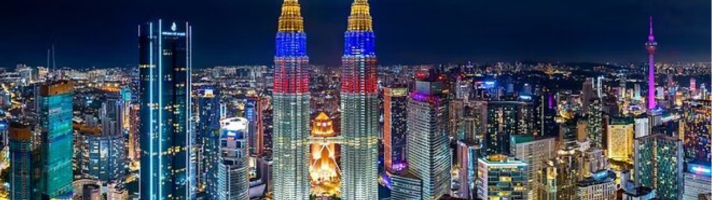
The Petronas Twin Towers are the image of Kuala Lumpur and were the world's tallest buildings from 1998 to 2004. At 452 metres, they remain the world's tallest twin towers. The sky bridge connecting the two towers on the 41st and 42nd floors is the most photographed element. The observation deck on level 86 gives panoramic views across KL's sprawling, forested, vertical skyline.
Why they earn the ticket price despite the crowds:
- World's tallest twin towers, the scale only becomes real when you are standing at the base looking up
- Sky bridge on levels 41–42; the connecting bridge between towers is a genuine engineering spectacle and the most popular photo location
- Level 86 observation deck; 360-degree views over KL, the KLCC park below, and the city extending to the horizon
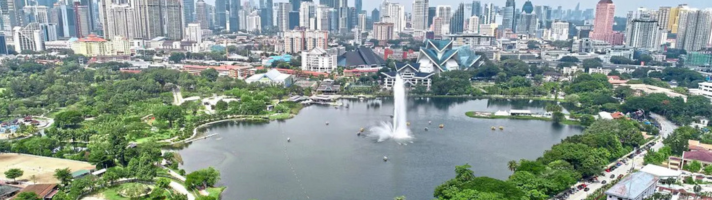
- KLCC Park directly below beautifully landscaped with a lake and fountain, free to walk through, excellent for photographs looking back up at the towers
- Book tickets online in advance, tickets sell out days ahead, especially on weekends. RM 80 per adult.
- Arrive early, the first slot (9am) has the shortest queues and the best morning light
Batu Caves — Rainbow Stairs and a Temple Inside a Mountain
About 13 km north of central KL, Batu Caves is a limestone hill complex housing a series of caves and Hindu temples, the most famous of which is the Cathedral Cave reached via 272 rainbow-painted concrete stairs watched over by a 43-metre gold statue of Lord Murugan. The Thaipusam festival here, held annually in January or February, attracts over one million visitors and is one of the largest Hindu festivals outside India.
What to know before you go:
- Free entry to the main Cathedral Cave, the stairs are the experience
- 272 stairs, vertical climb, manageable in 15–20 minutes not genuinely difficult
- Resident macaque monkeys throughout the site, do not feed them, secure your food and bags
- The cave interior at the top houses active Hindu temples, dress modestly and remove shoes where indicated
- Arrive before 9am to beat the crowds, it gets very busy by mid-morning, particularly on weekends
- Accessible by KTM Komuter train from KL Sentral approximately 30 minutes, very affordable
- The rainbow stairs were painted in 2018, the colour scheme changes occasionally
Jalan Alor — The Street That Made KL Famous for Food
Jalan Alor in Bukit Bintang is KL's most famous food street — a single road that transforms in the evening into a continuous open-air restaurant with hundreds of tables spilling onto the pavement and the smell of char kway teow, satay, and grilled seafood reaching the surrounding streets. It is loud, busy, and completely excellent.
Why no KL visit is complete without an evening here:
- Open from approximately 5pm, the street fills progressively as evening arrives
- Char kway teow; flat rice noodles stir-fried with egg, prawns, Chinese sausage, and bean sprouts in a wok over very high heat. The best versions in KL are here.
- Satay; skewered grilled meat with peanut sauce, served with compressed rice and cucumber. Order more than you think you need.
- Grilled stingray, a KL street food speciality. Sounds unusual, tastes extraordinary.
- Drinks: fresh coconut water, calamansi lime juice, and grass jelly drinks are all better here than anywhere else
- Halal status: most Jalan Alor stalls are run by Chinese operators and are not halal-certified. For halal street food, Kampung Baru night market and the hawker stalls around Masjid India are the right alternatives equally good and fully halal.
- Bukit Bintang, the surrounding area, is KL's entertainment and shopping district Pavilion KL mall is a five-minute walk
Little India, Brickfields — Where KL Feels Like Home
Brickfields, officially designated as KL's Little India, is the South Asian neighbourhood that Pakistani travelers consistently describe as the most immediately comfortable part of the city. The streets are lined with biryani houses, roti canai stalls, Indian sweet shops selling jalebi and halwa, sari shops, and spice merchants, all halal, all familiar, all at very low prices by Pakistani standards.
Why Brickfields deserves a dedicated half-day:
- Biryani that competes with anything available in Pakistan, the Tamilian-Muslim biryani style is different from Pakistani but equally serious
- Roti canai available from dawn, the flat, layered bread served with dhal and curry is the best breakfast in KL for PKR 80–120 per serving
- Indian Muslim restaurants (mamak restaurants) operate 24 hours, nasi lemak, mee goreng, and teh tarik available at 3am
- Sri Mahamariamman Temple in Brickfields, the most ornate Hindu temple in KL, free to visit from the outside
- KL Sentral station is directly adjacent making Brickfields the most logistically convenient base and the best area for budget accommodation
- Halal throughout, Brickfields' restaurant culture is rooted in Indian Muslim cooking
Masjid Jamek and Masjid Negara — Two Mosques, Two Centuries
KL has two mosque landmarks that together tell the story of the city's Islamic history — one colonial, one modern national.
Masjid Jamek was built in 1909 at the confluence of the Klang and Gombak rivers — the exact spot where Kuala Lumpur was founded by tin miners in the 1850s. The Mughal-influenced brick-and-dome architecture is unusual for Southeast Asia and immediately recognisable to Pakistani visitors. The River of Life development around the mosque has turned the historic confluence into a beautifully lit waterfront. Entry is free; dress modestly.
Masjid Negara is Malaysia's national mosque, built in 1965 in a modernist style with a distinctive 73-metre minaret and a 16-pointed star roof representing the 13 states of Malaysia and the five pillars of Islam. The interior is grand and peaceful. Non-Muslim visitors are welcome outside prayer times. Robes are provided at the entrance.
Chinatown — Petaling Street and the River of Life
KL's Chinatown around Petaling Street is the city's oldest commercial district — narrow covered market streets, knockoff goods stalls, Chinese temples, and some of the cheapest food in the city. It is not as atmospheric as older Asian Chinatowns but the energy is genuine and the food stalls are excellent.
What Chinatown offers:
- Petaling Street market covered arcade with clothing, bags, electronics, and street food at very low prices
- Sin Sze Si Ya Temple; KL's oldest Taoist temple, built in 1864, tucked behind the main market street
- River of Life, the restored confluence of KL's founding rivers, best photographed at night when blue LED lighting illuminates the waterfront
- Central Market (Pasar Seni), a heritage art deco building housing Malaysian craft shops, batik, pewter, and cultural goods. Better quality than Petaling Street for actual souvenirs.
- Accessible by MRT to Pasar Seni station
Genting Highlands — One Day Trip Worth Taking
About 50 km north of KL, Genting Highlands sits at 1,800 metres and is best known for its casino resort complex and theme parks. For Pakistani travelers, the draw is not the casino but the elevation genuinely cool mountain air within an hour of KL's tropical heat, and a cable car ride (Awana SkyWay) through cloud forest that is one of the most scenic short rides in Southeast Asia.
What to know about Genting:
- Awana SkyWay cable car, 3.4 km, world's fastest gondola, travels through genuine cloud forest
- First World Hotel at the summit is one of the world's largest hotels, more spectacle than necessity
- SkyAvenue Mall at the summit indoor entertainment and dining at 1,800 metres
- Outdoor theme park areas are available, confirm current attractions as development is ongoing
- Temperature at the summit: 15–25°C even in peak summer, bring a light jacket
- Accessible by bus from KL Sentral (approximately 1 hour) or Grab
- Best as a half-day trip combined with an afternoon in Brickfields
Malaysian Food — What Pakistani Travelers Should Eat in KL
KL's food is one of the main reasons to visit and one of the most underserved topics in Pakistani travel content about the city.
Nasi Lemak: coconut rice served with sambal, fried anchovies, hard-boiled egg, cucumber, and peanuts. Malaysia's national dish available at every mamak restaurant and many street stalls. Eat it for breakfast. It costs approximately RM 3–8 at a local stall.
Roti Canai: flaky flatbread cooked on a griddle and served with dhal and curry. Available 24 hours at mamak restaurants. Closer to a paratha in texture than anything else immediately recognisable to Pakistani palates. Order it with teh tarik (pulled milk tea) for a complete breakfast for RM 5–7.
Char Kway Teow: flat rice noodles stir-fried in a very hot wok with egg, prawns, bean sprouts, and Chinese sausage. One of KL's signature dishes. Not halal at Chinese stalls, look for halal-certified versions in the Malay food courts.
Laksa: spiced noodle soup, available in multiple regional variations across KL. Curry laksa (coconut milk base) is the KL version. Available at hawker centres throughout the city.
Satay: skewered grilled meat with peanut sauce. Halal, everywhere, excellent. Jalan Alor and the hawker centres near Masjid India are the best sources.
Teh Tarik: pulled milk tea, made by pouring tea between containers to create a frothy surface. The national drink of Malaysia. Drink it constantly. Available at every mamak restaurant for RM 1.50–3.
Halal guide: Mamak restaurants (Indian-Muslim owned, operating 24/7) are halal throughout KL. Malay food courts and restaurants are halal by default. Chinese restaurants and most Jalan Alor stalls are not halal-certified, the alternatives (Kampung Baru night market, Masjid India area, Brickfields mamak restaurants) are equally good and fully halal.
Getting Around KL
KL has one of the best urban rail networks in Southeast Asia, use it.
- LRT, MRT, and Monorail: three overlapping rail networks covering almost every major attraction. Download the MyRapid app for journey planning and contactless payment. A single journey costs RM 1–4 depending on distance.
- Grab: Southeast Asia's dominant ride-hailing app. Use it for everything the rail does not cover, reliable, metered, no overcharging. Download it before you land.
- KL Sentral: the central transit hub connecting all rail lines, long-distance buses, the airport express, and Brickfields. Orient yourself here first.
- KLIA Ekspres: the airport express train from Kuala Lumpur International Airport (KLIA) to KL Sentral. Takes 28 minutes. Costs RM 55. The fastest and most comfortable option from the airport.
- Grab from airport: cheaper than the express (approximately RM 60–90 to central KL) but takes 45–75 minutes depending on traffic
- Currency: Malaysian Ringgit (RM). Cards accepted widely at hotels, malls, and larger restaurants. Cash is useful for hawker stalls, night markets, and the rail network.
Best Time to Visit KL
KL is a year-round destination but two windows are clearly better than the others.
- May to July, the drier months with lower rainfall and more consistent sunshine. The most comfortable window for outdoor sightseeing, Batu Caves, and day trips. Peak of the year for visitor numbers but not uncomfortably crowded outside of school holidays.
- February to April, a second reasonably dry window between the two monsoon periods. March and April can have afternoon showers but mornings are generally clear.
- October to January, northeast monsoon season. Heavy afternoon and evening rain is common, sometimes severe. The city functions normally and indoor attractions are unaffected, but outdoor plans require flexibility.
- School holidays (mid-June and mid-November), KL fills with domestic Malaysian tourists and regional visitors. Book accommodation further ahead and expect longer queues at Petronas Towers and Batu Caves.
- KL's heat is consistent year-round 28–34°C. The question is only rain frequency, not temperature.
- Whenever you visit book your stay in advance and always go for guided activities